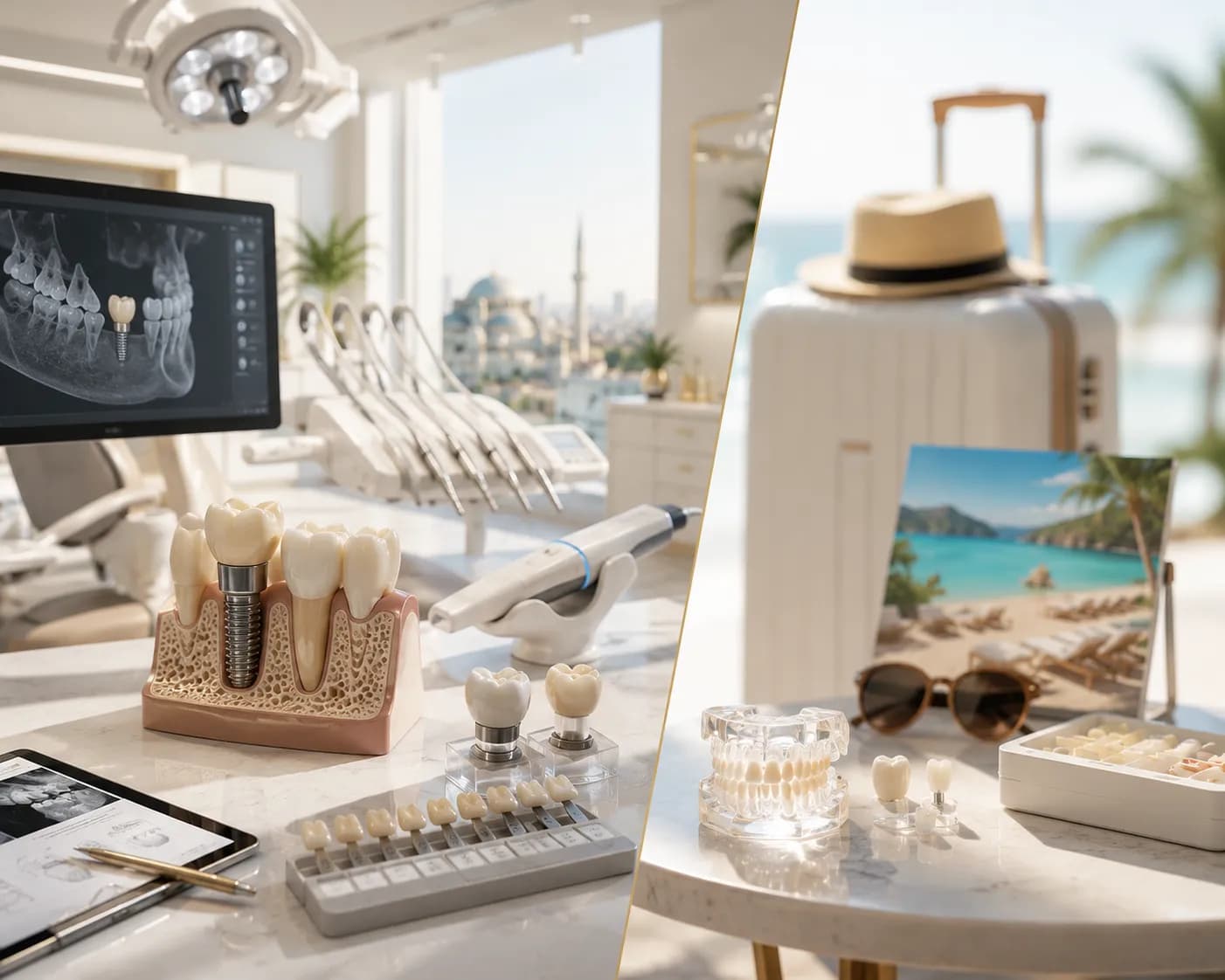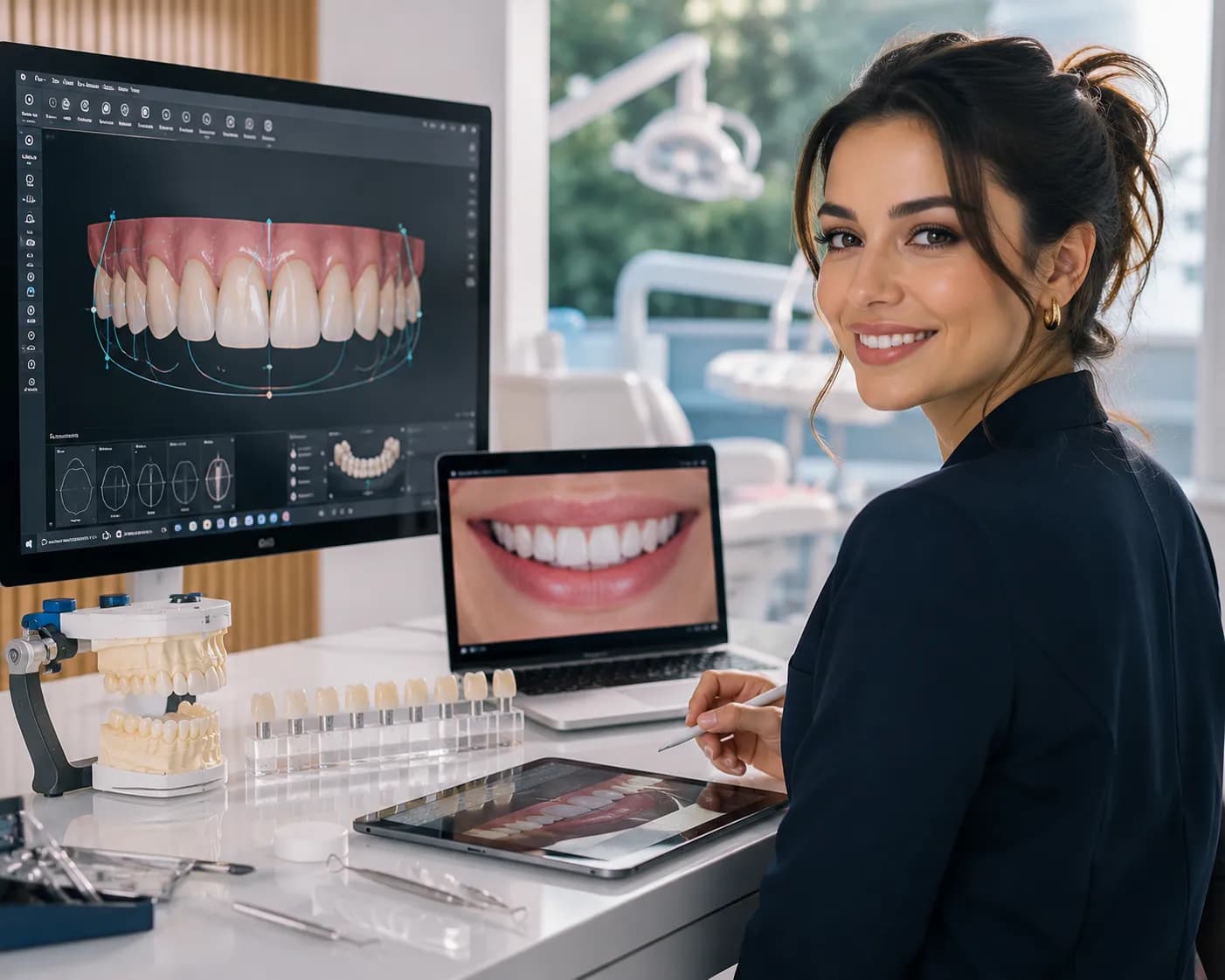
Zirconia crowns have become a widely used option for restoring damaged natural teeth and dental implants.
They are known for combining:
high mechanical strength
a metal-free structure
good tissue compatibility
resistance to fracture
the ability to mask dark underlying tooth structure
increasingly natural-looking aesthetic options
However, the term “zirconia crown” does not refer to one identical material.
Modern dentistry uses several zirconia formulations with different levels of strength, translucency and clinical indication.
A highly translucent zirconia crown designed for a front tooth is not necessarily the same as a high-strength zirconia crown used for a molar or full-arch bridge.
For this reason, patients should not choose zirconia only because it is advertised as strong, white or premium.
The correct question is:
Which type of zirconia is suitable for this particular tooth, bite and aesthetic requirement?
What Is a Zirconia Crown?
A zirconia crown is a ceramic dental restoration made primarily from zirconium dioxide.
Zirconium dioxide is processed into dental blocks or discs and shaped using computer-aided design and manufacturing systems.
The final crown can be:
milled as a single piece
layered with aesthetic porcelain
stained and glazed
polished
cemented or adhesively bonded, depending on the clinical situation
The American Dental Association identifies zirconia as one of the major materials used for indirect dental restorations. Its strength, fracture resistance and increasing range of translucency have contributed to its widespread use.
Is Zirconia a Metal?
No.
Zirconium is a chemical element, but zirconia used in dentistry is zirconium dioxide, which is classified as a ceramic.
A zirconia crown is therefore considered a metal-free restoration.
This distinction is important because patients sometimes confuse zirconia crowns with porcelain-fused-to-metal crowns.
A porcelain-fused-to-metal crown contains a metal framework covered by porcelain.
A zirconia crown uses a ceramic zirconia structure instead.
What Are the Main Types of Zirconia Crowns?
Monolithic Zirconia Crowns
A monolithic zirconia crown is milled from a single piece of zirconia.
It may be suitable for:
back teeth
patients with strong bite forces
implant crowns
situations with limited restorative space
patients who grind or clench, depending on the overall case
Possible Advantages
high fracture resistance
no outer porcelain layer that can chip away
suitable for high-load regions
relatively conservative material thickness in selected cases
useful for implant-supported restorations
Possible Limitations
some high-strength formulations may appear more opaque
detailed colour characterisation may be limited
the surface must be carefully polished
poor contouring may compromise cleaning
an excessively hard or rough surface can affect the opposing tooth
Multilayer or High-Translucency Zirconia
Multilayer zirconia is designed with gradual changes in colour and translucency through the material.
It may be used for:
visible front teeth
premolars
selected posterior teeth
smile-zone crowns
cases requiring a more natural colour gradient
Possible Advantages
improved translucency
more natural transition from cervical to incisal areas
metal-free structure
reduced need for extensive external layering
better aesthetic integration than older opaque zirconia types
Possible Limitations
increased translucency may be accompanied by lower strength in some formulations
may not be ideal for every heavy-load case
dark underlying teeth may require careful masking
exact performance depends on zirconia generation and design
Layered Zirconia Crowns
A layered zirconia crown uses a zirconia framework with aesthetic porcelain applied over part or all of the surface.
It may be selected when detailed colour, translucency and texture are important.
Possible Advantages
strong internal framework
highly individual aesthetic characterisation
useful for selected front teeth
natural surface detail and depth
Possible Limitations
the outer veneering ceramic can chip
repair may be difficult
requires skilled laboratory work
greater laboratory complexity
not always the best choice for severe grinding
Systematic reviews have identified chipping of veneering ceramic as one of the recognised technical complications of zirconia-based restorations.
Full-Contour High-Strength Zirconia
High-strength zirconia is primarily selected for demanding functional situations.
It may be considered for:
molars
implant-supported bridges
longer-span restorations
patients with strong chewing forces
selected full-arch restorations
Its main priority is structural strength rather than maximum translucency.
When Might a Zirconia Crown Be Recommended?
A Heavily Damaged Tooth
A zirconia crown may be considered when a tooth has:
extensive decay
a large filling
weakened walls
a significant fracture
loss of structural support
The tooth must still be restorable.
A crown cannot save a tooth with a hopeless root fracture or insufficient periodontal support.
A Root Canal-Treated Tooth
Back teeth that have lost substantial structure after root canal treatment may require cuspal coverage.
Zirconia may be selected because of its strength, particularly in high-load areas.
Not every root canal-treated tooth automatically needs a zirconia crown. The decision depends on the remaining tissue and fracture risk.
A Dental Implant
Zirconia is commonly used for implant-supported crowns and bridges.
It may provide:
a metal-free visible restoration
high strength
good colour control
support for single crowns or larger prostheses
The crown is attached to an implant abutment rather than directly to a natural tooth.
A Dark or Discoloured Tooth
More opaque zirconia formulations may help mask:
metal posts
dark tooth structure
severely discoloured cores
titanium components
However, if the material is too opaque, the crown may look less natural in the front region.
The dentist and technician must balance masking ability with translucency.
A Patient With Strong Bite Forces
Zirconia may be considered for patients with:
bruxism
clenching
heavy posterior loading
limited restorative space
However, material strength alone does not solve bruxism.
A complete plan may also require:
bite analysis
adjustment of heavy contacts
night-guard therapy
management of parafunctional habits
regular monitoring
What Are the Main Benefits of Zirconia Crowns?
High Strength
Zirconia is one of the strongest dental ceramic materials.
Its mechanical properties make it suitable for many back teeth, implant crowns and bridges.
The ADA reports that dentists commonly value zirconia for fracture resistance and flexural strength.
Metal-Free Structure
Zirconia crowns do not have a conventional metal framework.
This means they avoid the dark metal margin that may become visible with some porcelain-fused-to-metal crowns after gum recession.
Good Aesthetic Potential
Modern translucent and multilayer zirconia can provide a natural appearance.
The final result depends on:
zirconia type
tooth preparation
underlying tooth colour
crown thickness
staining
surface texture
laboratory skill
gum health
Not every zirconia crown has the same aesthetic quality.
Ability to Mask Dark Tooth Structure
High-opacity zirconia can help cover dark underlying material.
This may be useful in teeth with:
metal posts
severe discolouration
dark core build-ups
titanium abutments
Broad Clinical Use
Zirconia can be used in:
front crowns
back crowns
implant crowns
bridges
full-arch restorations
selected complex rehabilitations
The exact formulation should match the treatment indication.
Tissue Compatibility
Zirconia is generally regarded as a biocompatible dental ceramic.
However, calling it completely allergy-free would be too absolute.
Adverse reactions to dental restorative materials are uncommon overall, but patient history and the complete cementation system should still be considered.
Reduced Risk of Porcelain Chipping in Monolithic Designs
Monolithic zirconia has no separate porcelain veneer covering the chewing surface.
This may reduce the risk of outer ceramic chipping compared with layered designs.
The crown itself can still fracture, become loose or fail for other reasons.
What Are the Limitations of Zirconia Crowns?
Not Every Zirconia Crown Looks Equally Natural
Older or high-strength zirconia can appear more opaque than glass ceramics such as lithium disilicate.
This may matter when replacing a single front tooth beside natural teeth.
Opposing Tooth Wear
A rough or poorly adjusted zirconia surface may contribute to wear of the opposing tooth.
The surface should be carefully polished after bite adjustment.
The concern is not only zirconia hardness but also surface roughness, crown shape and bite design.
Difficult Adjustment and Removal
Zirconia is strong.
That strength can make:
chairside adjustment
crown removal
access for later root canal treatment
repair
more challenging.
Dentists surveyed by the ADA reported that restoration removal and shade matching can be difficult aspects of zirconia use.
Risk of Chipping in Layered Crowns
Layered zirconia can develop chipping in the outer porcelain.
This risk is influenced by:
ceramic thickness
framework support
bite forces
laboratory technique
grinding
crown design
Irreversible Tooth Preparation
A zirconia crown still requires tooth preparation.
The amount removed varies according to:
tooth condition
zirconia formulation
required thickness
colour masking
bite clearance
crown design
It is inaccurate to claim that zirconia always requires minimal preparation.
Difficulty With Adhesive Bonding in Some Situations
Zirconia does not behave like silica-based glass ceramic.
Its surface treatment and cementation protocol require specific knowledge.
The choice between conventional cementation and adhesive bonding depends on preparation form, retention, crown design and clinical conditions.
Possible Gum Problems
Any crown can contribute to gum inflammation if it has:
overhanging margins
bulky contours
open contacts
rough surfaces
subgingival margins
poor cleanability
The material alone does not guarantee healthy gums.
Zirconia vs Lithium Disilicate
Both are ceramic materials, but they serve different priorities.
Zirconia May Be Preferred When
high strength is important
the tooth is in a heavy-load region
a dark base must be masked
an implant crown is planned
limited space is available
a bridge is needed
Lithium Disilicate May Be Preferred When
high translucency is essential
a single visible front tooth is being restored
strong adhesive bonding is desired
the underlying tooth colour is favourable
detailed aesthetic integration is the priority
The ADA notes that zirconia and lithium disilicate crowns can both show favourable survival, while material choice should depend on restoration design and patient needs.
Zirconia vs Porcelain-Fused-to-Metal Crowns
Zirconia crowns are metal-free.
Porcelain-fused-to-metal crowns use a metal framework.
Zirconia may offer:
no visible metal edge
improved light behaviour in selected cases
strong monolithic options
broader acceptance among patients requesting metal-free treatment
Porcelain-fused-to-metal may offer:
long clinical history
predictable strength
suitability for selected bridges
potentially lower cost in some clinics
Neither option is universally better.
How Are Zirconia Crowns Manufactured?
Digital Scan or Impression
The prepared tooth, neighbouring teeth and bite are recorded using:
an intraoral scanner
conventional impression material
Digital Design
Dental software is used to design:
crown shape
margin
contacts
bite
thickness
emergence profile
Milling
The crown is milled from a zirconia disc or block.
At this stage, the material may be larger than its final size because it contracts during sintering.
Sintering
The milled crown is heated in a specialised furnace.
This process provides its final strength and dimensions.
Staining, Glazing or Layering
Depending on the design, the crown may be:
stained
glazed
polished
layered with ceramic
individually characterised
Quality Control
The laboratory and dentist evaluate:
fit
margin
thickness
colour
contacts
surface
structural integrity
What Is the Zirconia Crown Procedure?
Consultation and Diagnosis
The dentist examines:
tooth damage
decay
cracks
gum health
root condition
existing fillings
bite
tooth vitality
radiographs where necessary
KZBV patient guidance notes that teeth planned for crowns or bridge support should first be evaluated for health and suitability.
Discussion of Alternatives
The dentist should explain whether the tooth might instead be treated with:
a filling
an inlay or onlay
composite bonding
a veneer
a different crown material
extraction and replacement, if the tooth is not restorable
Tooth Preparation
The tooth is numbed.
Decay and unstable restorative material are removed.
The tooth is shaped to provide enough space and retention for the crown.
If a large amount of tissue is missing, a core build-up may be required.
Scan or Impression
The prepared tooth and bite are recorded.
Temporary Crown
A temporary crown protects the tooth while the final restoration is produced.
It may also help evaluate:
shape
length
bite
gum response
appearance
Laboratory Production
The zirconia crown is designed, milled, sintered and finished.
Trial Appointment
The dentist checks:
marginal fit
internal fit
contact points
bite
colour
shape
gum relationship
Cementation or Bonding
The crown is cleaned, prepared and attached using the selected cementation protocol.
Follow-Up
The dentist may review:
bite
sensitivity
gum health
cleaning
patient comfort
Can Zirconia Crowns Be Made in One Day?
Same-day zirconia crowns may be possible in clinics with suitable digital scanning, milling and sintering systems.
However, same-day treatment is not suitable for every case.
A laboratory workflow may be preferable when:
several front teeth are involved
complex colour matching is required
layering is planned
temporary crowns need to be evaluated
gum healing is necessary
bite rehabilitation is complex
Same-day production should not be presented as automatically superior.
How Long Do Zirconia Crowns Last?
Zirconia crowns can function for many years, but no fixed lifespan can be guaranteed.
A systematic review reported five-year survival rates of approximately 95.9% for tooth-supported zirconia-based crowns and 97.1% for implant-supported crowns. Survival does not mean that every crown remained completely free of complications.
Longevity depends on:
crown design
tooth or implant support
zirconia type
bite
grinding
preparation
cementation
gum health
oral hygiene
smoking
trauma
regular maintenance
Claims that every zirconia crown will last 15 or 20 years are not medically reliable.
Some crowns may last longer, while others may need earlier repair or replacement.
How Much Does a Zirconia Crown Cost?
The cost varies according to:
country
clinic
dentist
tooth location
zirconia type
laboratory
monolithic or layered design
temporary crown
digital workflow
core build-up
post
root canal treatment
gum treatment
number of crowns
complexity
A realistic quotation should clarify whether it includes:
examination
imaging
tooth preparation
temporary crown
laboratory fee
final crown
core build-up
post
root canal treatment
adjustments
follow-up
A price provided only from a photograph should usually be considered preliminary.
The final diagnosis may change the treatment plan.
Why Can Zirconia Crowns Cost Less in Turkey?
Treatment prices can differ because of:
local labour costs
clinic operating expenses
laboratory costs
currency conversion
competition
number of restorations
treatment package structure
A lower price does not automatically indicate lower quality.
It also does not guarantee equivalent quality.
Patients should verify:
exact zirconia type
manufacturer where relevant
treating dentist
laboratory
temporary crowns
tooth preparation
aftercare
warranty conditions
possible additional treatment
Are Zirconia Crowns Suitable for Every Tooth?
No.
Another material or treatment may be more appropriate when:
a very natural single front-tooth match is required
there is insufficient restorative space
the tooth can be treated more conservatively
adhesive glass ceramic is preferable
gum health is unstable
the tooth cannot be restored
bite conditions are not controlled
A zirconia crown is a material choice, not a diagnosis.
Can Zirconia Crowns Damage Opposing Teeth?
They can contribute to wear when:
the surface is rough
the crown is poorly polished
the bite is high
the patient grinds
the anatomy is incorrect
Proper polishing after adjustment and control of parafunctional forces are essential.
Can Zirconia Crowns Break?
Yes.
Although zirconia is strong, failure can occur because of:
insufficient material thickness
internal defects
poor crown design
excessive bite forces
trauma
unsupported porcelain layers
poor tooth support
cementation failure
No dental restoration is unbreakable.
Can Decay Develop Under a Zirconia Crown?
Yes.
The natural tooth remains vulnerable at the crown margin.
Decay can develop because of:
plaque
sugar exposure
open margins
cement loss
gum recession
poor cleaning
food trapping
A crown does not protect the tooth from all future disease.
How Should Zirconia Crowns Be Maintained?
Brush Twice Daily
Use fluoride toothpaste and clean around the crown margin carefully.
Clean Between Teeth
Use:
floss
interdental brushes
super floss under bridges
suitable water flossing devices
Avoid Very Hard Objects
Do not use crowns to:
open packaging
bite ice
crack hard shells
chew pens
Control Grinding
A night guard may be recommended for patients with bruxism.
Attend Regular Reviews
The dentist should monitor:
crown margin
gum health
bite
crown surface
opposing tooth wear
cementation
decay
fractures
Leeds Teaching Hospitals advises twice-daily brushing, interdental cleaning and sugar control to preserve crowns and natural teeth.
When Should You Contact the Dentist?
Arrange an assessment if you notice:
pain when biting
increasing sensitivity
crown movement
a sharp edge
visible fracture
gum swelling
persistent bleeding
bad taste
food trapping
floss tearing
change in bite
Zirconia Crowns for International Patients
Before travelling, patients should ask:
which zirconia generation will be used
whether the crown is monolithic or layered
who prepares the tooth
which laboratory produces the restoration
whether temporary crowns are included
how many appointments are needed
whether colour and bite corrections are possible
what documentation will be provided
how aftercare works after returning home
A clinically complex treatment should not be rushed only to fit a short trip.
Zirconia Crowns at DentisLife
At DentisLife in Ankara, Turkey, zirconia is selected only when its optical and mechanical properties match the needs of the tooth or implant.
The assessment may include:
clinical examination
radiographs
gum evaluation
bite analysis
tooth-colour assessment
digital photography
intraoral scanning
evaluation of remaining tooth structure
discussion of other ceramics
temporary restoration planning
laboratory communication
follow-up planning
Possible zirconia options may include:
high-strength monolithic zirconia
multilayer zirconia
translucent zirconia
layered zirconia
implant-supported zirconia restorations
The goal is not to place the same zirconia crown on every tooth.
The objective is to balance:
strength
aesthetics
tooth preservation
gum health
cleanability
long-term maintenance
Frequently Asked Questions
Are zirconia crowns better than porcelain crowns?
Not in every case.
Zirconia may offer greater strength, while some glass ceramics may offer greater translucency for selected front teeth.
Are zirconia crowns metal-free?
Yes. Dental zirconia is a ceramic material.
Do zirconia crowns look natural?
They can look natural when the correct zirconia type, thickness, colour and surface design are selected.
Are zirconia crowns suitable for front teeth?
Yes, particularly modern translucent or multilayer zirconia. However, another ceramic may be preferable for some single front teeth.
Are zirconia crowns suitable for molars?
They are commonly used for molars because of their strength.
Can zirconia crowns stain?
The ceramic itself is relatively colour stable, but surface stains and plaque can accumulate.
Can zirconia crowns be whitened?
No. Whitening does not change zirconia colour.
Do zirconia crowns require tooth shaving?
Yes. Crown placement generally requires irreversible tooth preparation.
Can a zirconia crown fall off?
Yes. Cement failure, decay, poor retention or excessive forces can cause loosening.
How long do zirconia crowns last?
They can function for many years, but lifespan varies and cannot be guaranteed.
CTAA zirconia crown should be chosen because its strength, translucency and design suit the individual tooth—not simply because zirconia is popular.
International patients considering zirconia crown treatment at DentisLife in Ankara, Turkey, can submit recent photographs and radiographs for a preliminary assessment.
The final material and treatment plan are confirmed after clinical examination, bite analysis and evaluation of the remaining tooth structure.
International Health Tourism Authorization CertificateDentisLife holds the International Health Tourism Authorization Certificate and is officially authorized to provide healthcare services to international patients in Turkey.
This authorization supports structured international patient processes, documented clinical procedures, transparent planning and organized follow-up.
It does not guarantee that zirconia is the correct material for every patient or every tooth.