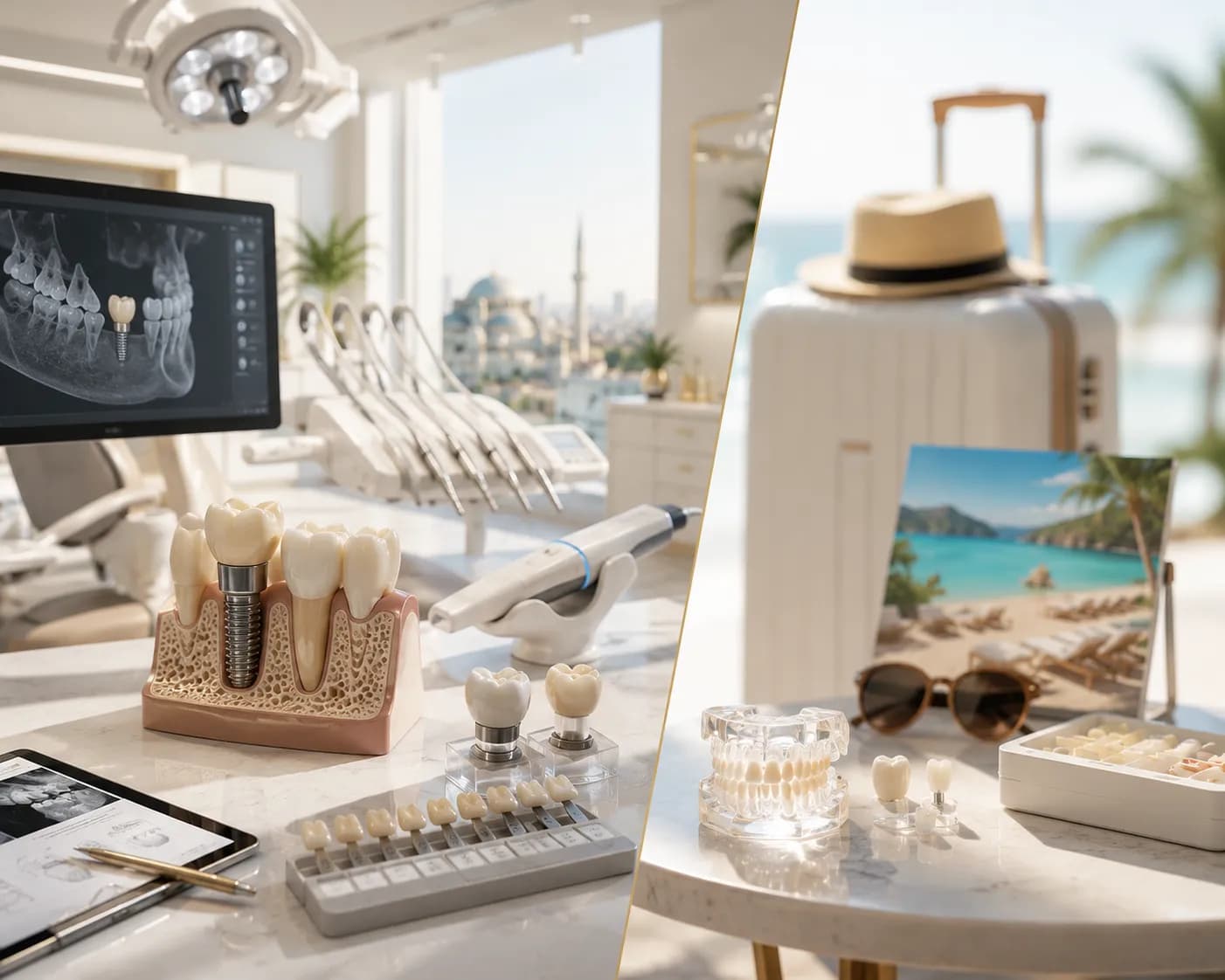
A dental crown is a custom-made restoration placed over a damaged, weakened or heavily restored tooth.
It can restore the tooth’s shape, strength, appearance and function when a simple filling is no longer sufficient.
Crowns are also used as part of other treatments, including:
dental bridges
dental implants
root canal treatment
full-mouth rehabilitation
severe tooth-wear management
cosmetic smile correction
A crown may improve appearance, but it is not only a cosmetic treatment. In many cases, its main purpose is to protect a structurally compromised tooth.
Because crown placement usually requires irreversible tooth preparation, the decision should be based on a clinical diagnosis rather than appearance alone.
What Is a Dental Crown?
A dental crown is a restoration that covers most or all of the visible part of a tooth above the gum line.
It is often described as a cap, but modern crowns are individually designed to reproduce:
tooth shape
tooth length
contact with neighbouring teeth
bite
colour
surface texture
gum contours
Crowns can be made from ceramic, zirconia, porcelain fused to metal, metal alloys or other restorative materials.
The ideal material depends on:
tooth location
bite forces
aesthetic requirements
remaining tooth structure
gum condition
available space
existing restorations
grinding habits
Why Might You Need a Dental Crown?
Extensive Tooth Decay
Small cavities can often be restored with a filling.
When decay has destroyed a large part of the tooth, a filling may not provide sufficient structural support.
A crown may help protect the remaining tooth from further fracture.
Before crown placement, all decay should be removed and the tooth should be assessed for restorability.
Large Existing Fillings
A tooth with a very large filling may have thin or weakened walls.
Over time, these walls may crack under chewing forces.
A crown may be recommended when the remaining natural structure is no longer strong enough to support a new filling predictably.
Cracked or Fractured Teeth
Some cracks affect only the outer enamel, while others extend deeper into the tooth.
A crown may help hold the remaining tooth structure together when the fracture is restorable.
However, a crown cannot save every cracked tooth.
A vertical root fracture or a crack extending too far below the gum may make extraction necessary.
Severe Tooth Wear
Grinding, clenching, acid erosion and long-term bite problems can shorten or weaken teeth.
Crowns may be part of a rehabilitation plan when wear is extensive.
The cause of the wear should also be controlled. Otherwise, the new crowns may be exposed to the same damaging forces.
Root Canal-Treated Teeth
A root canal-treated tooth may require a crown when a significant amount of structure has been lost.
This is particularly common in back teeth, which experience greater chewing forces.
Not every root canal-treated tooth automatically requires a crown. The decision depends on:
tooth type
size of the access cavity
previous fillings
cracks
remaining walls
bite forces
Supporting a Dental Bridge
A traditional dental bridge often uses crowns on neighbouring teeth as supports.
These crowns hold the artificial replacement tooth between them.
Restoring a Dental Implant
An implant crown is attached to a dental implant rather than a natural tooth.
It replaces the visible part of a missing tooth.
The design of an implant crown differs from that of a crown placed over a natural tooth because the underlying support is different.
Cosmetic Improvement
Crowns can improve tooth shape, colour and symmetry.
However, healthy teeth should not automatically receive full crowns for cosmetic reasons.
More conservative alternatives may include:
whitening
composite bonding
orthodontics
veneers
enamel reshaping
What Are the Main Types of Dental Crowns?
All-Ceramic Crowns
All-ceramic crowns are made without a metal framework.
They may be suitable for patients who prioritise a natural appearance, particularly in the visible front region.
Modern ceramic systems can reproduce:
translucency
colour variation
surface texture
natural light reflection
Possible Advantages
natural appearance
no visible metal edge
good colour matching
suitable for selected front teeth
metal-free design
Possible Limitations
material choice must match bite forces
some ceramics may be less suitable for heavy grinding
fracture is possible
sufficient thickness is required
cost may be higher than some metal-based options
Lithium Disilicate Crowns
Lithium disilicate is a high-strength glass ceramic often used for highly aesthetic restorations.
It may be selected for:
front teeth
premolars
selected molars
crowns requiring natural translucency
cases where adhesive bonding is beneficial
It is often associated with materials such as E-Max, although exact product selection should be confirmed with the clinic.
Advantages
natural translucency
strong aesthetic potential
good colour integration
suitable for bonded restorations
metal-free
Limitations
not ideal for every high-load situation
requires correct tooth preparation
may fracture under excessive forces
material selection must consider grinding
Zirconia Crowns
Zirconia is a ceramic material known for high strength.
It is used in:
posterior crowns
implant crowns
bridges
full-arch restorations
selected front-tooth cases
Modern zirconia is available in different levels of strength and translucency.
High-strength zirconia may be suitable for heavy chewing areas, while more translucent zirconia may be chosen for visible teeth.
Advantages
high strength
metal-free
suitable for many posterior teeth
useful for implant restorations
can mask dark underlying teeth
available in aesthetic versions
Limitations
some types may appear more opaque than glass ceramic
poor polishing may contribute to wear of the opposing tooth
material selection varies greatly
excessive thickness or poor contours can affect cleaning
not every zirconia crown looks equally natural
Porcelain-Fused-to-Metal Crowns
Porcelain-fused-to-metal crowns have an internal metal framework covered with tooth-coloured porcelain.
They have been used for many years.
Advantages
established clinical history
good structural strength
suitable for many teeth
may be used in bridges
generally lower cost than some premium ceramic options
Limitations
a dark metal line may become visible near the gum
porcelain can chip
light transmission is more limited
gum recession may make the metal margin more visible
some patients prefer metal-free restorations
Full Metal and Gold Alloy Crowns
Metal crowns are known for durability and relatively conservative thickness requirements.
Gold alloy crowns may be used mainly for back teeth where appearance is less important.
Advantages
high durability
good resistance to fracture
relatively thin material can be used
kind to opposing teeth when properly polished
useful in high-load areas
Limitations
metallic colour
limited aesthetic acceptance
metal cost
possible sensitivity to specific alloys
not usually selected for visible front teeth
Resin Crowns
Resin crowns are commonly used as temporary restorations.
They may be placed while the final crown is being manufactured.
Advantages
quick to produce
protects the prepared tooth
provides temporary appearance
allows evaluation of bite and shape
useful during healing or laboratory stages
Limitations
lower strength
may stain
may wear
can fracture
generally not intended as a long-term solution
Which Crown Material Is Best?
There is no single best crown material for every patient.
The correct choice depends on:
front or back tooth
bite pressure
tooth colour
gum level
tooth preparation
available enamel and dentine
grinding
implant or natural tooth
aesthetic expectations
laboratory design
cost
A highly translucent crown may be ideal for one front tooth but unsuitable for a heavily loaded molar.
A strong zirconia crown may be appropriate for a back tooth but may need careful characterisation for a visible front tooth.
Porcelain or Zirconia: Which Is Better?
Patients often compare porcelain and zirconia, but the terminology can be confusing.
Zirconia is itself a ceramic material.
The practical comparison is often between:
translucent glass ceramic
monolithic zirconia
layered zirconia
porcelain-fused-to-metal
other ceramic systems
Glass ceramics may offer more natural translucency in selected front teeth.
Zirconia may provide greater strength in high-load areas.
The choice should follow clinical need rather than popularity.
What Are the Benefits of Dental Crowns?
Protection of Weakened Teeth
A crown can cover and protect a tooth with reduced structural strength.
Restoration of Function
Crowns can restore:
chewing
bite contacts
tooth height
contact with neighbouring teeth
speech in selected cases
Improvement in Appearance
A crown can improve:
colour
shape
length
symmetry
visible fractures
old discoloured restorations
Support for Other Treatments
Crowns can support:
bridges
implants
root canal-treated teeth
extensive bite rehabilitation
Customised Design
Modern crowns can be designed according to:
facial proportions
gum line
neighbouring teeth
smile line
bite
shade
texture
What Are the Risks and Limitations?
Tooth Reduction
Crown placement usually requires removal of tooth structure around several surfaces.
This is irreversible.
The amount depends on the material and the condition of the tooth.
Sensitivity
Temporary sensitivity to cold, heat or biting pressure may occur after preparation.
Persistent or increasing pain should be evaluated.
Need for Root Canal Treatment
Some teeth may later develop pulpal inflammation and require root canal treatment.
This risk may be higher in teeth with:
deep decay
large old fillings
cracks
extensive preparation
previous trauma
Crown Fracture or Chipping
Ceramic may chip or fracture under excessive forces.
Grinding and clenching increase risk.
Loss of Cementation
A crown can become loose because of:
cement failure
decay
insufficient tooth structure
excessive bite forces
fracture
contamination during cementation
Recurrent Decay
A crowned tooth can still develop decay around the crown margin.
The crown does not make the underlying tooth immune to disease.
Gum Irritation
Poorly shaped crowns or difficult-to-clean margins can contribute to inflammation.
Unnatural Appearance
A crown may look artificial if it is:
too opaque
too white
too thick
too long
poorly matched
incorrectly shaped
What Is the Dental Crown Procedure?
Step 1: Examination and Diagnosis
The dentist evaluates:
decay
cracks
remaining tooth structure
gum health
bite
root condition
existing fillings
tooth vitality
radiographs where indicated
Step 2: Treatment Planning
The dentist discusses:
whether a crown is necessary
alternative treatments
material options
expected preparation
treatment stages
risks
cost
maintenance
Step 3: Tooth Preparation
Decay and weak restorative material are removed.
The tooth is shaped to provide space and support for the crown.
If the tooth has lost substantial structure, a core build-up may be required.
Step 4: Digital Scan or Impression
The prepared tooth, neighbouring teeth and bite are recorded.
This may be performed with:
an intraoral scanner
conventional impression material
Step 5: Temporary Crown
A temporary crown may be placed to:
protect the tooth
support appearance
maintain tooth position
reduce sensitivity
allow evaluation of shape and bite
Step 6: Laboratory Production
The crown is designed and manufactured.
Depending on the workflow, this may involve:
digital design
milling
sintering
ceramic layering
staining
glazing
quality control
Step 7: Trial and Adjustment
The dentist evaluates:
fit
margin
colour
shape
contact points
bite
gum response
Step 8: Final Cementation or Bonding
The crown is attached to the tooth with a suitable cement or adhesive protocol.
Step 9: Follow-Up
The bite, comfort and gum health may be checked after placement.
Can a Crown Be Made in One Day?
Same-day crowns may be possible in clinics with CAD/CAM systems.
The process may include:
digital scanning
chairside design
milling
staining or glazing
same-day placement
However, same-day treatment is not always the best option.
A laboratory-made crown may be preferable when:
complex colour matching is required
several front teeth are being treated
layered ceramic is planned
gum healing is needed
bite rehabilitation is complex
multiple trial stages are beneficial
Speed should not replace proper planning.
How Long Does a Dental Crown Last?
No crown lasts forever.
A well-planned crown may function for many years, but lifespan varies.
Factors include:
material
remaining tooth structure
bite forces
grinding
oral hygiene
gum health
smoking
diet
trauma
crown fit
cementation
maintenance
regular dental reviews
Some crowns may last more than ten years, while others may require earlier repair or replacement.
It is more accurate to discuss risk factors than to promise a fixed lifespan.
How Much Does a Dental Crown Cost?
The cost depends on:
crown material
tooth location
laboratory
dentist experience
digital workflow
core build-up
root canal treatment
post placement
temporary crown
gum treatment
number of crowns
complexity
country and clinic costs
A quotation should clarify whether it includes:
examination
imaging
temporary crown
final crown
laboratory fees
build-up
root canal treatment
post
follow-up
adjustments
A low unit price should be interpreted cautiously if important clinical steps are excluded.
Can a Crown Damage the Tooth?
A crown does not automatically damage a tooth.
However, crown treatment requires irreversible preparation.
Possible biological effects include:
sensitivity
pulpal irritation
later root canal treatment
gum inflammation
recurrent decay
fracture of the underlying tooth
The safest crown is one that is clinically necessary, conservatively prepared and properly maintained.
Healthy teeth should not receive full crowns when a less invasive solution can achieve the treatment goal.
How Should You Care for a Crown?
Brush Twice Daily
Clean the crown margin carefully with fluoride toothpaste.
Clean Between the Teeth
Use:
floss
interdental brushes
super floss under bridges
water flossers where suitable
Avoid Using Teeth as Tools
Do not use crowned teeth to open packaging or bite hard objects.
Manage Grinding
A night guard may be recommended if you clench or grind.
Attend Dental Reviews
The dentist can monitor:
crown margin
gum health
bite
decay
cracks
movement
hygiene
Watch for Warning Signs
Contact the clinic if you notice:
pain when biting
increasing sensitivity
crown movement
bad taste
swelling
bleeding around the crown
visible fracture
food trapping
floss catching at the margin
Dental Crowns for International Patients
International patients should ask:
who will prepare the tooth
which material will be used
which laboratory will make the crown
whether a temporary crown is included
how many visits are needed
how adjustments are handled
what records are provided
how follow-up works after returning home
whether the material is available in their home country
Complex crown treatment should not be rushed solely to fit a short travel schedule.
Dental Crowns at DentisLife
At DentisLife in Ankara, Turkey, crowns are selected according to the structural and aesthetic needs of each tooth.
The planning process may include:
clinical examination
radiographic assessment
gum evaluation
bite analysis
digital photography
intraoral scanning
shade selection
assessment of remaining tooth structure
discussion of alternatives
temporary restoration
laboratory communication
follow-up planning
Possible materials may include:
zirconia
lithium disilicate
other all-ceramic systems
porcelain-fused-to-metal
temporary resin
Healthy teeth are not automatically assigned full crowns only to create a uniform smile.
The objective is to restore damaged teeth while preserving as much natural tissue as reasonably possible.
Frequently Asked Questions
Is a crown better than a filling?
A crown may be more appropriate when the tooth is too damaged or weakened for a filling.
A small cavity usually does not require a crown.
Is a crown painful?
Local anaesthesia is used during preparation.
Temporary sensitivity may occur afterward.
Does every root canal-treated tooth need a crown?
No.
The decision depends on tooth type, remaining structure, cracks and bite forces.
Can a crown fall off?
Yes.
Cement failure, decay, fracture or excessive forces can cause loosening.
Can a crowned tooth get decay?
Yes.
Decay can form around the crown margin.
Which crown looks most natural?
Highly aesthetic ceramic crowns can look very natural, but the result also depends on preparation, laboratory work, colour matching and gum health.
Are zirconia crowns always better?
No.
Zirconia offers high strength, but other ceramics may provide better translucency in selected front teeth.
Can crowns be whitened?
No.
Whitening changes natural tooth colour but does not bleach ceramic or metal-based crowns.
How many visits are needed?
Many crowns require two or more visits.
Same-day crowns may be possible in selected cases.
Do crowns last forever?
No.
They may function for many years but can eventually need repair or replacement.
A dental crown should restore a tooth because it is clinically necessary—not simply because it is the fastest way to change a smile.
International patients considering crown treatment at DentisLife in Ankara, Turkey, can request an online preliminary assessment with recent photographs and radiographs.
The final plan is confirmed after clinical examination, assessment of the remaining tooth structure and discussion of material options.
International Health Tourism Authorization CertificateDentisLife holds the International Health Tourism Authorization Certificate and is officially authorized to provide healthcare services to international patients in Turkey.
The authorization supports structured international patient procedures, documented clinical processes, transparent planning and organized follow-up.
It does not replace diagnosis, informed consent or careful material selection.