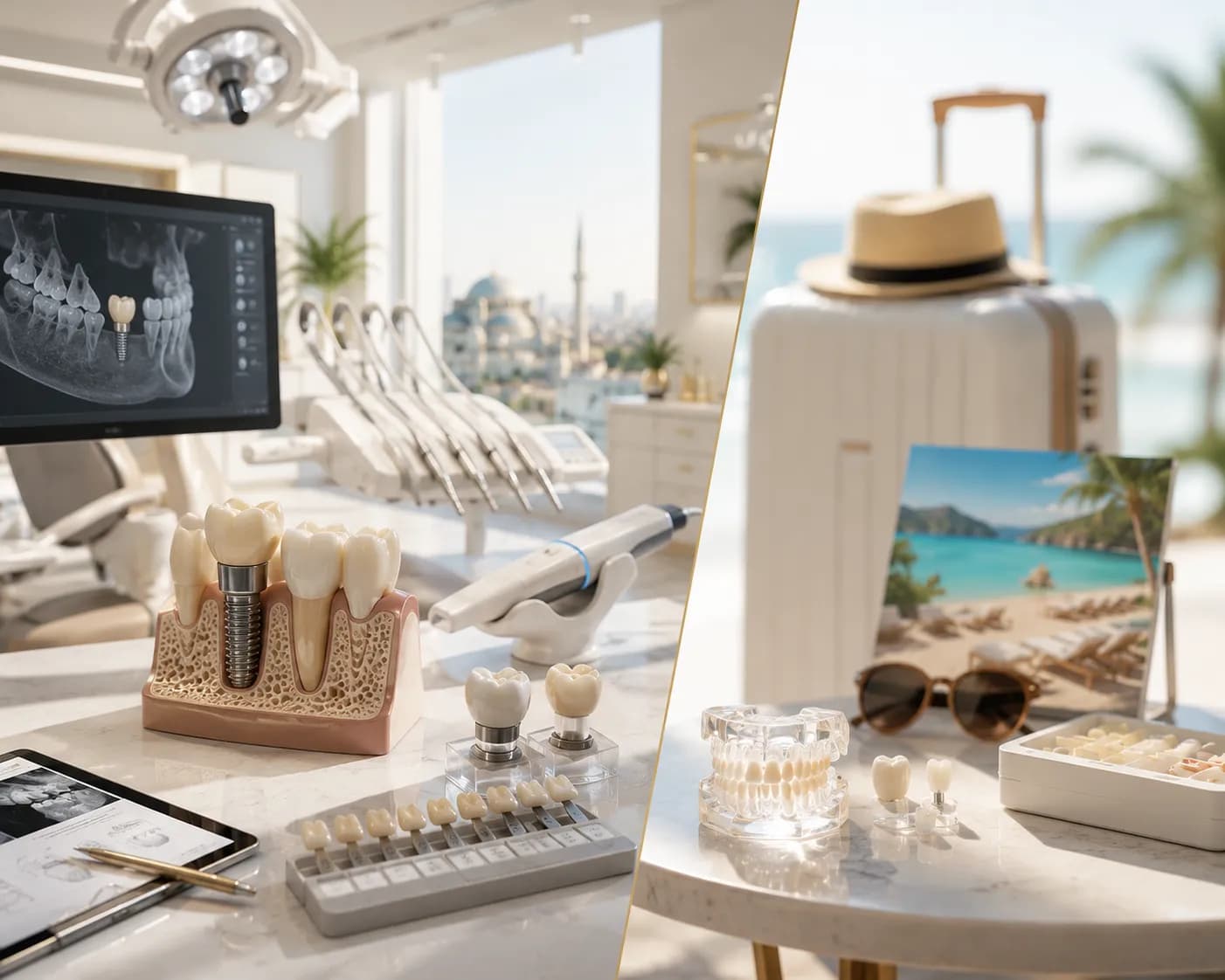
The word “cheap” can be misleading when discussing dental implants.
Affordability matters, but the lowest initial price is not necessarily the most cost-effective treatment.
An implant solution represents good value only when it is:
clinically appropriate
correctly planned
made with traceable components
supported by a suitable final restoration
maintainable over time
accompanied by transparent follow-up
An extremely low quotation may exclude important parts of treatment, such as the abutment, temporary restoration, final crown, bone grafting, imaging or aftercare.
The better question is not:
Where can I find the cheapest implant?
It is:
Which treatment can replace my missing teeth with appropriate safety, controlled long-term costs and the least unnecessary intervention?
What Does the Cost of a Dental Implant Include?
The total fee usually covers much more than the implant fixture.
Depending on the case, it may include:
clinical examination
X-rays or three-dimensional imaging
digital planning
implant surgery
implant fixture
abutment
temporary restoration
final crown, bridge or denture
dental laboratory work
bone grafting
sinus lift surgery
extractions
medication
follow-up visits
long-term maintenance
Dental implants can support single crowns, fixed bridges or removable dentures, so the term “implant treatment” can describe very different procedures and prices.
Why Do Implant Prices Vary So Much?
The final cost can be affected by:
number of missing teeth
implant positions
available bone
number of implants
implant brand and component system
surgical complexity
type of final prosthesis
restorative material
dentist and laboratory experience
clinic location
extent of follow-up
Two quotations can only be compared meaningfully when they include the same clinical stages and components.
An advertised implant fixture without an abutment and crown is not equivalent to a complete quotation for surgery, components, temporary teeth and the final restoration.
What Is the Least Expensive Implant Option?
There is no single least expensive solution for every patient.
The most economical plan depends on:
how many teeth are missing
where the gaps are located
whether some natural teeth can be preserved
bone availability
preference for fixed or removable teeth
ability to clean the restoration
bite forces
long-term maintenance capacity
A single implant crown may be appropriate for one missing tooth.
An implant-supported bridge may replace several teeth with fewer implants.
For a fully edentulous patient, an implant-retained removable denture may cost less than a fixed full-arch bridge.
Single Implant for One Missing Tooth
A single implant generally supports one crown.
It may be considered when:
one tooth is missing
neighbouring teeth are healthy
bone is sufficient
a conventional bridge is not preferred
A potential benefit is that adjacent healthy teeth may not need to be prepared.
The complete fee should still include more than the implant fixture. Patients should confirm the cost of the abutment, crown, imaging, temporary tooth and follow-up.
Implant-Supported Bridge for Several Missing Teeth
When several neighbouring teeth are missing, one implant for every tooth may not be necessary.
An implant-supported bridge can use a smaller number of implants to support several replacement teeth. Dental implants are routinely used to support both short-span and larger fixed bridges.
This may reduce:
number of surgical sites
number of implant components
surgical complexity
total cost
However, implant numbers should not be reduced solely to lower the price.
Planning must consider:
length of the missing area
bone quality
implant position
bite forces
bridge design
cleaning access
Implant Overdenture: Greater Stability With Fewer Implants
An implant overdenture is a removable denture retained or supported by dental implants.
For fully edentulous patients, it may be more affordable than a completely fixed full-arch bridge.
Implants can improve denture retention and stability through different attachment systems.
Potential benefits include:
fewer implants than some fixed solutions
greater stability than a conventional complete denture
removable access for cleaning
potentially simpler repair
lower initial cost in many cases
Potential limitations include:
the denture remains removable
attachments may wear
regular maintenance is necessary
comfort depends on bone, soft tissue and design
Consensus evidence indicates that implant therapy can substantially improve patient-reported outcomes in edentulous patients. Patients may report comparable satisfaction with removable implant overdentures and fixed complete implant prostheses, even though their design, hygiene requirements and costs differ.
All-on-4, All-on-6 and Other Full-Arch Concepts
Full-arch implant treatment replaces an entire arch of teeth with an implant-supported prosthesis.
Terms such as All-on-4 and All-on-6 generally describe the number of implants used to support the restoration.
These systems can be more economical than placing an implant for every missing tooth.
They are not universal packages.
The appropriate number of implants depends on:
jaw anatomy
bone volume
implant distribution
bite
initial stability
prosthesis length
restorative design
cleaning access
patient risk factors
Immediate loading is also not suitable for every patient. The ITI distinguishes immediate loading, immediate restoration, early loading and conventional loading according to when the prosthesis is connected and whether it receives bite contact.
A full-arch quotation should explain:
the temporary restoration
final restoration material
timing of the final prosthesis
number of trips
grafting requirements
repair process
cleaning instructions
Mini Implants and Narrow-Diameter Implants
Smaller-diameter implants may be used in selected situations, including limited spaces and certain overdenture treatments.
They are not automatically a low-cost substitute for standard implants.
Evidence for narrow-diameter implants shows favourable survival in selected indications, but suitability depends on implant diameter, position, bone width, loading and prosthetic design.
Patients should ask about:
implant diameter
one-piece or two-piece design
intended load
position
final prosthesis
availability of replacement components
An implant should not be made smaller only because it costs less.
Can Avoiding Bone Grafting Reduce the Cost?
Bone grafting can increase both treatment cost and healing time.
In some cases, careful implant positioning or a different prosthetic design may reduce the need for extensive grafting.
This is not always medically appropriate.
Bone grafting is used when the existing bone is inadequate for the planned implant position.
Instead of simply removing grafting from the plan, the dentist may assess:
whether grafting is truly required
whether another implant design is suitable
whether a bridge or overdenture is preferable
whether another implant position is possible
whether removable treatment is acceptable
Does Every Missing Tooth Need an Implant?
No.
Several missing teeth may be replaced with:
an implant-supported bridge
a conventional bridge
a removable partial denture
an implant-retained denture
a full-arch prosthesis
Bridges and removable dentures are recognised alternatives or complementary methods for replacing missing teeth.
A cost-effective plan considers the entire arch rather than multiplying the cost of a single implant by every missing tooth.
Can Choosing a Less Expensive Implant Brand Reduce Costs?
Implant systems differ in:
clinical documentation
surface technology
component range
restorative options
international availability
long-term component supply
price
A newer or less expensive system is not automatically poor quality.
A premium brand is not automatically necessary for every patient.
Patients should request:
exact manufacturer and system
country of manufacture
original components
implant passport
clinical documentation
future availability of screws and abutments
access to components in their home country
A low-cost system may become expensive if compatible components cannot be sourced later.
Practical Ways to Reduce Costs Safely
Compare Complete Treatment Plans
Do not compare only the final total.
Check whether both plans include the same:
implant number
implant system
abutments
temporary teeth
final restoration
restorative material
grafting
sedation
reviews
aftercare
Ask About Alternative Designs
Useful questions include:
Do I need one implant for each missing tooth?
Could an implant-supported bridge work?
Is an implant overdenture suitable?
Can any teeth be preserved?
Is a removable solution reasonable?
Is bone grafting essential?
Are different final materials available?
Consider Staged Treatment
Some care can be completed in phases.
The first stage may involve:
controlling infection
treating gum disease
removing hopeless teeth
providing temporary teeth
delaying implants until conditions are stable
Staging must be clinically planned and should not leave disease untreated.
Request a Written, Itemised Quotation
The document should address:
implant fixture
abutment
temporary restoration
final crown or bridge
graft material
sinus lift
extractions
medication
follow-up
repairs
additional trips
Review Financing Carefully
Some providers offer instalments or third-party financing.
Patients should examine:
total payable amount
interest
fees
repayment term
deposit
cancellation rules
what happens if the treatment plan changes
An affordable monthly payment does not make an unnecessary procedure appropriate.
Can Dental Schools Offer Lower-Cost Implant Treatment?
University dental hospitals and training centres may use different fee structures.
Treatment may be delivered by supervised trainees or dentists completing advanced education.
Possible advantages include:
structured supervision
multidisciplinary assessment
reduced fees in selected programmes
Possible limitations include:
longer appointments
waiting lists
limited eligibility
more visits
restricted treatment availability
Access varies by country and institution.
Does Insurance Cover Dental Implants?
Coverage varies widely by country and policy.
A plan may cover:
part of the prosthetic restoration
selected surgical procedures
treatment after trauma or cancer
an alternative standard treatment
a fixed contribution
Other policies exclude most implant costs.
Patients should ask their insurer in writing:
Is the implant fixture covered?
Is the abutment covered?
Is the crown or bridge covered?
Is there a waiting period?
Is there an annual limit?
Is pre-authorisation required?
Is treatment abroad eligible?
Why Are Some Dental Implants So Cheap?
Legitimate reasons for lower prices may include:
lower local operating expenses
lower labour and laboratory costs
exchange rates
bulk purchasing
efficient workflows
simpler restorative materials
Lower prices may also reflect missing or reduced services.
Warning signs include:
no comprehensive examination
definitive planning from one photograph
undisclosed implant brand
no abutment information
temporary teeth excluded
final crown excluded
inadequate implant numbers
no maintenance programme
no itemised quotation
pressure to pay immediately
unrealistic guarantees
Is Implant Treatment Abroad Really More Affordable?
Treatment abroad may cost less because local operating costs differ.
The real total should also include:
flights
accommodation
transfers
food
time away from work
repeat journeys
medication
companion expenses
follow-up
possible corrections
emergency treatment at home
International patients should confirm whether the healthcare provider is officially authorized.
The Turkish Ministry of Health publishes lists of healthcare facilities holding international health tourism authorization. Its official page was updated on May 11, 2026.
Why Long-Term Maintenance Belongs in the Budget
Dental implants are not maintenance-free.
Future expenses may include:
professional cleaning
radiographic monitoring
replacement of overdenture attachments
management of loose screws
prosthetic repairs
crown or bridge replacement
treatment of peri-implant inflammation
night guards for grinding
Implants can provide long-term support for crowns, bridges and dentures, but they require personalised care and review.
A low starting price offers poor value if the restoration cannot be cleaned, maintained or repaired.
Affordable Dental Implant Treatment at DentisLife
At DentisLife in Ankara, Turkey, cost-effective implant planning does not begin by selecting the lowest possible implant number. It begins by identifying the treatment that is medically, functionally and financially appropriate for the patient.
Depending on the diagnosis, the options may include:
a single implant
an implant-supported bridge
an implant-retained removable denture
a fixed full-arch restoration
preservation of treatable natural teeth
staged treatment
different restorative materials
Planning may involve clinical examination, radiographs, three-dimensional imaging when indicated, bone assessment, bite analysis and prosthetically driven implant positioning.
Before treatment, the implant system, number of implants, temporary restoration, final material, possible additional surgery and follow-up schedule should be explained clearly.
DentisLife holds the International Health Tourism Authorization Certificate and is officially authorized to provide healthcare services to international patients in Turkey. For patients travelling from abroad, planning therefore considers the surgical appointment as well as travel duration, healing phases, temporary teeth, return visits and communication after the patient returns home.
A lower total cost should result from an appropriate treatment design and local cost structure—not from omitting necessary diagnostics, using untraceable components or shortening treatment in a medically unsuitable way.
Frequently Asked Questions
What is the cheapest type of implant treatment?
For fully edentulous patients, an implant-retained removable denture may cost less than a fixed bridge.
For several missing teeth, an implant bridge may be more economical than one implant per tooth.
Are mini implants always cheaper?
They may have a lower initial cost, but they are only suitable for selected situations.
Their diameter and design must match the intended load and prosthesis.
Do I need one implant for every missing tooth?
No.
Several missing teeth can often be replaced with an implant-supported bridge.
Is All-on-4 always the least expensive full-arch treatment?
No.
Four implants may be suitable in selected cases, while other patients require a different number or design.
Can I save money by selecting a cheaper implant brand?
Possibly, but price should not be the only factor.
Documentation, component availability and restorative options are important.
Is the crown included in the implant price?
Not always.
Ask whether the quotation includes the fixture, abutment, temporary restoration and final crown.
Is an implant overdenture inferior to a fixed bridge?
No.
It is a different treatment with potential advantages in cleaning, repair and cost.
Are very cheap implants unsafe?
Not automatically.
Unusually low prices should be checked for missing services, untraceable components and inadequate aftercare.
Is travelling to Turkey for implants cost-effective?
It can be for extensive treatment.
Flights, accommodation, repeat visits and long-term follow-up must be included in the calculation.
Can insurance pay for dental implants?
It depends on the individual policy.
Written confirmation should be obtained before treatment.
Summary
Affordable dental implant care is not about choosing the cheapest implant fixture or the lowest online quotation.
Good value comes from:
accurate diagnosis
preserving treatable natural teeth
selecting the correct implant number
choosing an appropriate prosthetic design
using traceable materials
receiving a complete written quotation
planning reliable follow-up
ensuring the restoration can be repaired and maintained
A single implant, implant-supported bridge, implant overdenture or fixed full-arch solution may each be the most economical option in a different clinical situation.
The lowest starting price is not necessarily the best offer. The important question is whether the treatment is complete, medically appropriate and maintainable for many years.