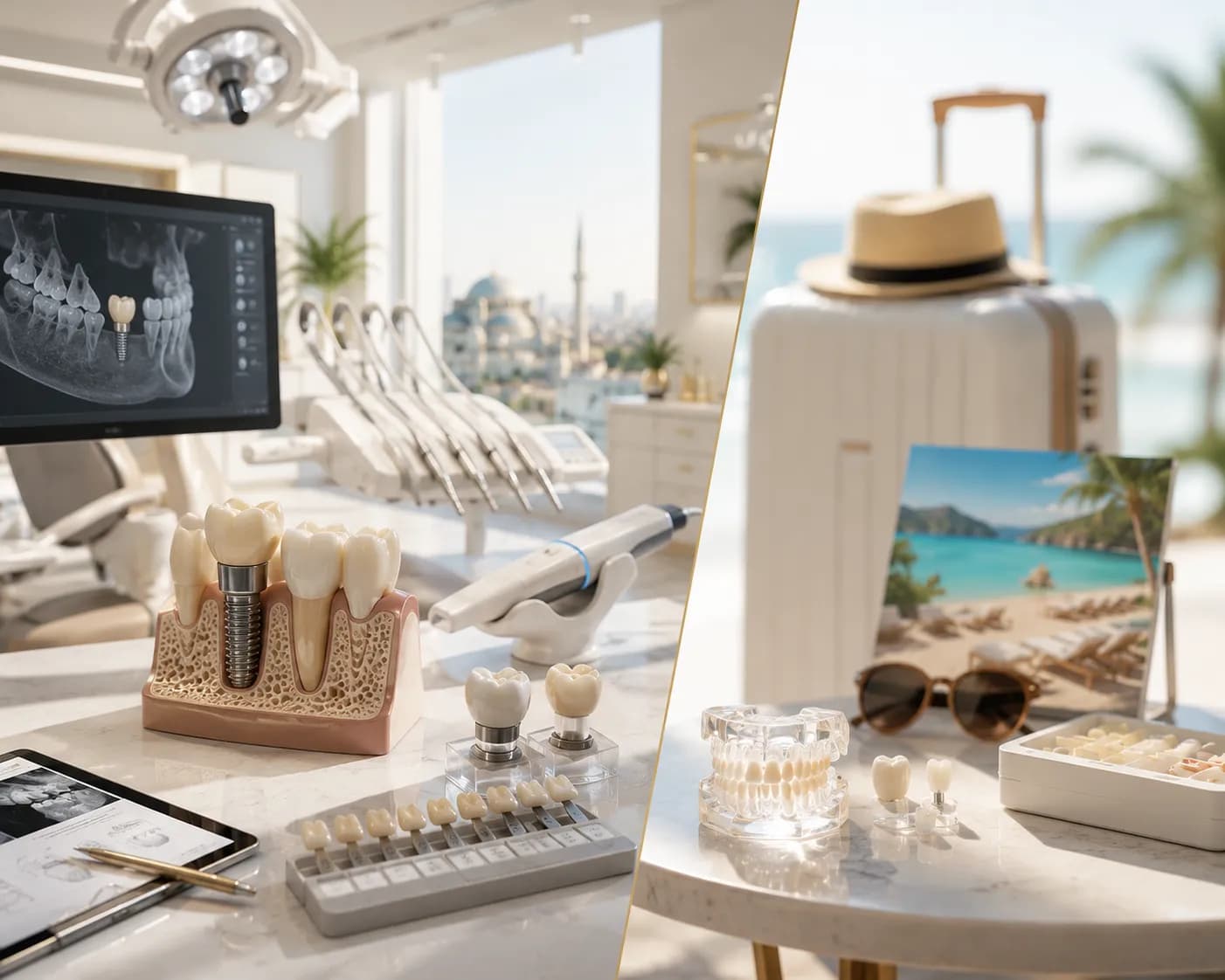
Choosing a dental clinic abroad should involve much more than comparing prices, hotel packages or before-and-after photographs.
The right clinic should be able to explain who will treat you, why the recommended treatment is necessary, which alternatives exist, how risks will be managed and what will happen after you return home.
This is especially important for complex procedures such as dental implants, full-mouth rehabilitation, veneers, crowns, bone grafting and orthodontic treatment.
Patients considering treatment in Turkey should evaluate the clinic as a healthcare provider first and a travel service second.
A reliable decision is based on qualifications, diagnosis, treatment planning, transparency, documentation and long-term follow-up.
Why Choosing the Clinic Matters as Much as Choosing the Treatment
Two clinics may advertise the same procedure while providing very different levels of diagnosis, planning and follow-up.
For example, the phrase “full-mouth implants” does not explain:
how many implants are planned
whether teeth can still be preserved
whether bone grafting is necessary
which implant system will be used
whether temporary teeth are included
how the bite will be designed
when the final prosthesis will be delivered
who will manage complications
what follow-up is available after the patient returns home
A treatment name alone does not describe the quality of the treatment process.
The General Dental Council advises patients considering dental care abroad to understand the risks, identify the treating professional, ask about regulation and clarify how complaints or complications will be managed.
1. Verify That the Clinic Is Officially Authorized
The first step is to confirm that the clinic is legally registered and authorized to treat international patients.
In Turkey, international health tourism healthcare providers are regulated through the Ministry of Health. The Ministry publishes official lists of healthcare facilities that hold an International Health Tourism Authorization Certificate.
Patients should check:
the clinic’s full legal name
its registered address
whether it appears on the official authorization list
whether the authorization belongs to the clinic itself
whether an intermediary company is involved
whether that intermediary is also officially authorized
A logo or certificate image on a website should not be accepted without verification.
The clinic’s legal name and address should match the details shown on official records, invoices, consent forms and treatment documents.
2. Find Out Who Will Actually Treat You
A clinic may advertise a large team, but the patient should know which dentist will personally perform each stage.
Ask for:
the dentist’s full name
professional registration
university education
clinical experience
areas of practice
role in the treatment
who will perform surgery
who will design and fit the final restoration
For multidisciplinary treatments, different clinicians may be responsible for surgery, restorative dentistry, periodontology, orthodontics or endodontics.
This can be appropriate, but the responsibilities should be clearly coordinated.
Patients should be cautious when communication occurs only through sales representatives and access to the treating dentist is limited.
A clinical recommendation should come from a qualified dental professional after reviewing the patient’s medical and dental information.
3. Look for Diagnosis Before Treatment Packages
A trustworthy clinic should not finalize an irreversible treatment solely from a few photographs or a short online message.
Online consultation can provide an initial assessment, but it cannot fully replace:
clinical examination
gum evaluation
bite analysis
tooth vitality testing
periodontal measurements
radiographic assessment
three-dimensional imaging when indicated
evaluation of bone and soft tissue
discussion of patient expectations
A provisional plan may change after the patient is examined in person.
This is not necessarily a negative sign. It may show that the clinic is adapting the treatment to the actual clinical findings.
Be cautious if a clinic promises a final number of veneers, crowns or implants before evaluating whether the teeth can be preserved.
4. Ask Whether Healthy Tooth Structure Will Be Preserved
A good treatment plan should be based on medical necessity and tissue preservation.
Before accepting crowns or extractions, ask:
Can the natural tooth be restored?
Is a veneer more conservative than a crown?
Is composite bonding an option?
Does the tooth need root canal treatment?
Is extraction truly necessary?
Can gum disease be treated before implants?
Are there less invasive alternatives?
Cosmetic goals should not automatically justify aggressive tooth preparation.
Healthy enamel and natural tooth structure are valuable biological tissues. Once removed, they cannot be regenerated.
The safest plan is not always the fastest or most visually dramatic plan.
5. Review the Written Treatment Plan Carefully
A professional treatment plan should be specific enough for the patient to understand what is included.
It should ideally state:
diagnosis
recommended procedures
tooth numbers
treatment stages
treatment alternatives
expected number of visits
healing periods
temporary restorations
final materials
implant brand and components
laboratory procedures
anesthesia or sedation
possible additional procedures
risks and limitations
total estimated cost
conditions that may change the price
follow-up arrangements
A vague offer such as “20 crowns and hotel included” is not a complete clinical plan.
The patient should understand why each tooth is being treated.
6. Evaluate the Clinic’s Technology in Context
Technology can improve diagnosis and planning, but equipment alone does not guarantee quality.
Useful technologies may include:
digital radiography
panoramic imaging
CBCT for selected implant and surgical cases
intraoral scanners
digital photography
computer-guided implant planning
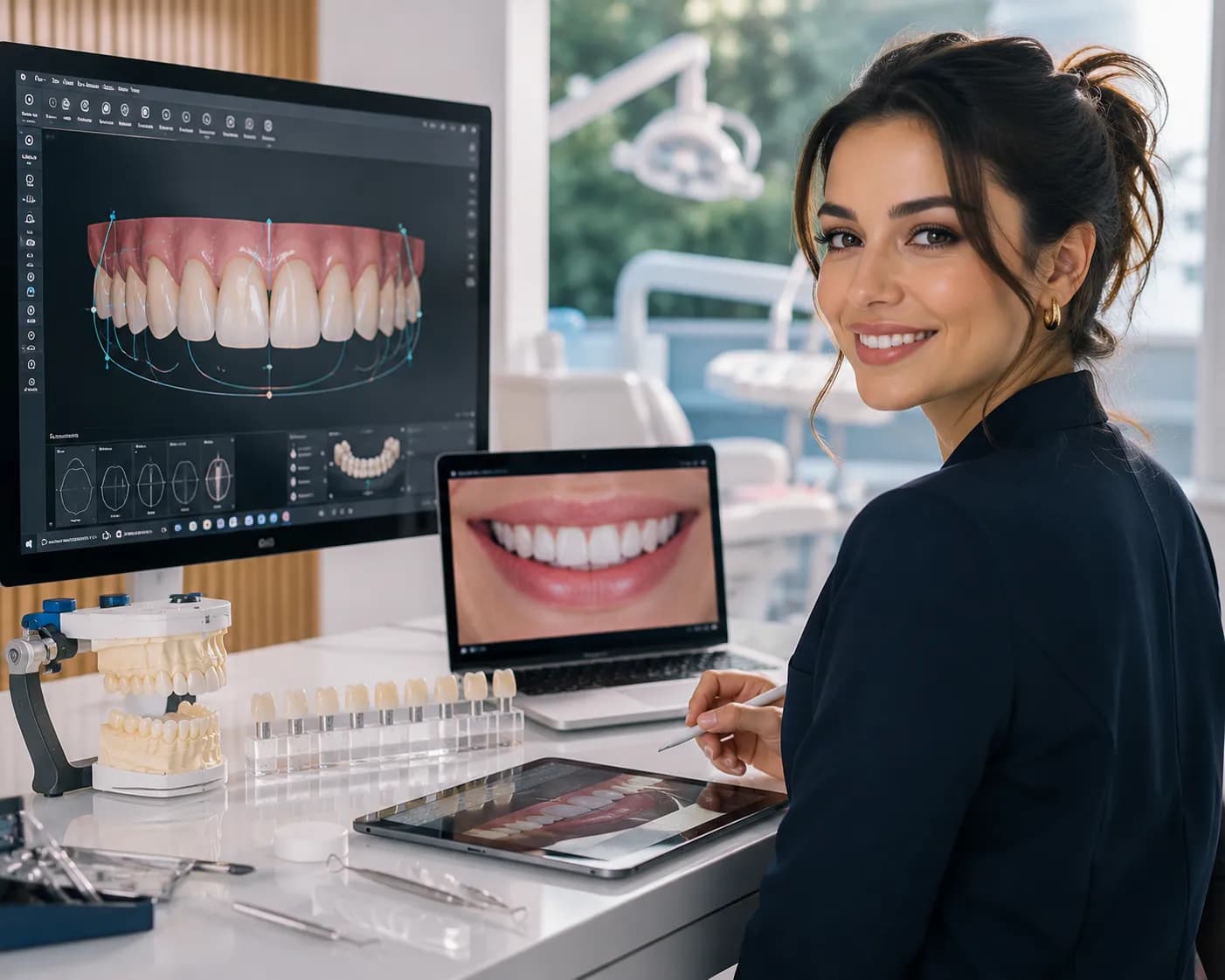
digital smile analysis
CAD/CAM-supported restorative workflows
The important question is not whether the clinic owns a scanner. It is how the information is interpreted and used.
For example, CBCT can help evaluate three-dimensional bone anatomy before implant surgery, but it should be requested when clinically justified rather than used as a marketing symbol.
Technology should support clinical judgment, not replace it.
7. Ask About Materials, Brands and Traceability
Patients should receive clear information about the materials placed in their mouth.
For implant treatment, ask:
implant manufacturer
exact implant system
component availability in Europe
implant dimensions
whether an implant passport will be provided
whether original components are used
which material will be used for the final prosthesis
For crowns and veneers, ask:
whether the material is zirconia, lithium disilicate, ceramic or another material
whether the restoration is monolithic or layered
which laboratory produces it
how shade and shape will be selected
whether a trial stage is included
The most expensive material is not automatically the most suitable.
Material choice should depend on tooth position, bite forces, aesthetics, remaining tooth structure and treatment design.
8. Assess Infection Control and Clinical Hygiene
A dental clinic should have clear infection-control procedures.
Patients may look for:
appropriate gloves, masks and protective equipment
sealed and sterilized instruments
clean clinical surfaces
separation of clean and contaminated areas
proper disposal of single-use items
documented sterilization procedures
safe water and suction systems
organized treatment rooms
Visible cleanliness is useful, but professional sterilization involves more than an attractive interior.
Patients may ask how instruments are cleaned, packaged, sterilized and monitored.
A premium waiting room does not substitute for a controlled clinical workflow.
9. Check How the Clinic Communicates Risks and Alternatives
Medical consent requires more than signing a form.
The clinic should explain:
what the treatment involves
expected benefits
realistic limitations
common risks
serious but less common complications
available alternatives
what may happen without treatment
recovery expectations
patient responsibilities
Government guidance on choosing dental care emphasizes that patients should receive information about the proposed treatment and provide informed consent before treatment begins.
Be cautious if the consultation focuses only on benefits or if complications are dismissed as impossible.
No ethical clinic can guarantee that an implant, crown, veneer or orthodontic treatment will never experience complications.
10. Understand the Full Cost, Not Only the Advertised Price
A low headline price may exclude important parts of treatment.
Ask whether the quotation includes:
examination
imaging
tooth extraction
temporary restorations
bone grafting
sinus lifting
abutments
final crowns or bridges
anesthesia
medication
laboratory revisions
follow-up
repair of temporary restorations
additional accommodation
return visits
The NHS treatment-abroad checklist advises patients to calculate exchange-rate changes, possible extended stays and the cost of additional journeys rather than considering only the advertised procedure price.
Patients should also check whether travel insurance covers planned dental treatment. Standard travel policies may exclude elective treatment abroad.
The cheapest initial quotation can become more expensive if necessary stages are omitted.
11. Examine the Aftercare and Complication Policy
Aftercare is one of the most important criteria when choosing a clinic abroad.
Ask:
Who can be contacted after treatment?
Is clinical support available after returning home?
How quickly will symptoms be assessed?
Are radiographs and records provided?
Can the clinic communicate with a local dentist?
What happens if a temporary restoration breaks?
What happens if an implant does not integrate?
Who pays for travel if a revision is required?
What is included in the warranty?
Which conditions can invalidate the warranty?
A written warranty should be read carefully.
A warranty may cover a laboratory component without covering travel, gum disease, bone loss, smoking-related complications or damage caused by bruxism.
It should not be confused with a medical guarantee.
The GDC specifically advises patients to ask about follow-up, complaint procedures and what happens when problems arise after treatment abroad.
12. Evaluate Reviews Without Relying on Them Alone
Patient reviews can provide useful information about communication, organization and the overall experience.
However, reviews should not be the only basis for a medical decision.
Consider:
whether reviews are detailed or generic
whether they mention long-term results
whether negative reviews receive professional responses
whether the same wording appears repeatedly
whether photographs appear authentic
whether the clinic identifies the treating dentist
whether the review discusses diagnosis and follow-up, not only hospitality
Before-and-after images can also be misleading if lighting, angle, lip position or image editing changes.
Images should be treated as examples, not promises of an identical outcome.
Warning Signs When Comparing Dental Clinics
Certain patterns should lead patients to investigate further.
Price Pressure
Be cautious when a clinic:
offers a discount only if the patient pays immediately
refuses to provide a written plan
changes the price repeatedly
emphasizes savings more than diagnosis
pushes the patient to book flights before clinical review
Excessively Fast Treatment Promises
Rapid treatment can be appropriate in selected cases, but biological healing cannot always be accelerated.
Be cautious of claims such as:
implants for everyone in one day
no bone graft needed in any case
permanent teeth immediately for every patient
painless treatment guaranteed
lifetime results guaranteed
Treatment Recommended Without Sufficient Records
A complete smile reconstruction should not be prescribed only from a social media photograph.
Unclear Dentist Identity
Patients should know who is responsible for treatment before arriving.
Tourism Presented as the Main Benefit
Dental treatment is not a holiday package.
Swimming, alcohol, smoking, strenuous activity and intensive sightseeing may need to be limited after surgical procedures.
Travel plans should support recovery.
Should You Choose a Clinic Based on the City?
Location matters, but the city should not replace clinical evaluation.
Patients may prefer a city because of:
flight access
accommodation
communication
healthcare infrastructure
ability to rest
access to follow-up
travel logistics
However, the clinic’s medical standards remain more important than the popularity of the destination.
Why Consider a Dental Clinic in Ankara?
Ankara is the capital of Turkey and has a healthcare-oriented environment rather than being primarily associated with coastal tourism.
For international dental patients, this may support a treatment journey focused on:
diagnosis
structured appointments
recovery
communication
treatment planning
multidisciplinary care
scheduled follow-up
This does not mean that every clinic in Ankara is automatically suitable.
Patients must still verify the clinic, clinicians, authorization and treatment process.
The value of Ankara lies in the possibility of organizing treatment around medical priorities rather than treating dentistry as an addition to a holiday.
How DentisLife Approaches International Dental Care
At DentisLife in Ankara, treatment planning begins with the patient’s dental condition rather than a standard package.
The process may include:
online preliminary consultation
review of radiographs and photographs
medical and dental history
in-person clinical examination
digital diagnostic imaging where indicated
evaluation of teeth, gums and bite
discussion of alternative treatment options
staged treatment planning
temporary and final restoration planning
written postoperative instructions
structured follow-up
The purpose is to identify a treatment that is clinically appropriate, maintainable and realistic for the patient.
At DentisLife, the number of crowns, veneers or implants is not treated as a fixed commercial package. It is determined after diagnosis and discussion of whether natural teeth can be preserved.
Questions to Send a Clinic Before Booking
International patients can use the following checklist:
What is the clinic’s full legal name?
Does it hold an International Health Tourism Authorization Certificate?
Who will perform my treatment?
What are the dentist’s qualifications?
Is my plan provisional until clinical examination?
Which teeth will be treated and why?
What alternatives are available?
Which implant or restorative materials will be used?
How many visits and trips are expected?
What temporary restoration will I receive?
What is included in the total price?
What happens if additional treatment is required?
What follow-up is available after I return home?
Will I receive radiographs and treatment records?
How are complications and revisions handled?
A clinic that answers these questions clearly is generally easier to evaluate than one that relies mainly on marketing language.
Frequently Asked Questions
How do I know whether a dental clinic in Turkey is legitimate?
Check the clinic’s legal name, address and official authorization. Clinics treating international patients should be verifiable through the official Ministry of Health lists.
Is the most expensive clinic always the best?
No. Price alone does not prove quality.
Evaluate diagnosis, clinician qualifications, materials, planning, infection control, communication and follow-up.
Is a very low price always unsafe?
Not necessarily, but unusually low prices require careful investigation.
The quotation may exclude imaging, temporary restorations, grafting, original components, final prosthetics or aftercare.
Should I choose a clinic with the most online reviews?
Reviews can help, but they do not replace professional credentials, clinical planning or official authorization.
Can I receive a final treatment plan online?
An online plan should usually be considered preliminary.
The definitive plan may require clinical examination, imaging and assessment of the gums, bite and tooth condition.
Should I speak directly with the dentist before booking?
For complex treatment, direct clinical communication is valuable.
A coordinator may manage logistics, but treatment recommendations should be confirmed by a dentist.
Is dental treatment abroad covered by ordinary travel insurance?
Many standard policies exclude planned treatment abroad. Patients may need specialist insurance and should confirm coverage before travel.
What documents should I receive after treatment?
Depending on the procedure, documents may include:
treatment summary
radiographs
implant passport
material information
medication instructions
laboratory details
aftercare guidance
invoices
warranty conditions
Choosing a clinic should begin with clinical questions, not a package price.
International patients considering treatment at DentisLife in Ankara, Turkey, can request an online preliminary assessment before travelling.
Recent radiographs, photographs, medical information and treatment expectations can be reviewed to prepare an initial plan. The final treatment decision is made after an in-person clinical examination and diagnostic assessment.
International Health Tourism Authorization CertificateDentisLife is listed among healthcare providers authorized by the Republic of Turkey Ministry of Health and holds the International Health Tourism Authorization Certificate.
The certificate confirms that the clinic is officially authorized to provide healthcare services to international patients under the applicable national framework.
For patients, this supports:
an officially authorized healthcare provider
regulated international patient processes
documented medical and administrative procedures
compliance with applicable standards
a more transparent treatment pathway
The certificate should be regarded as an important verification criterion, but it does not replace individual diagnosis, informed consent or appropriate clinical planning.