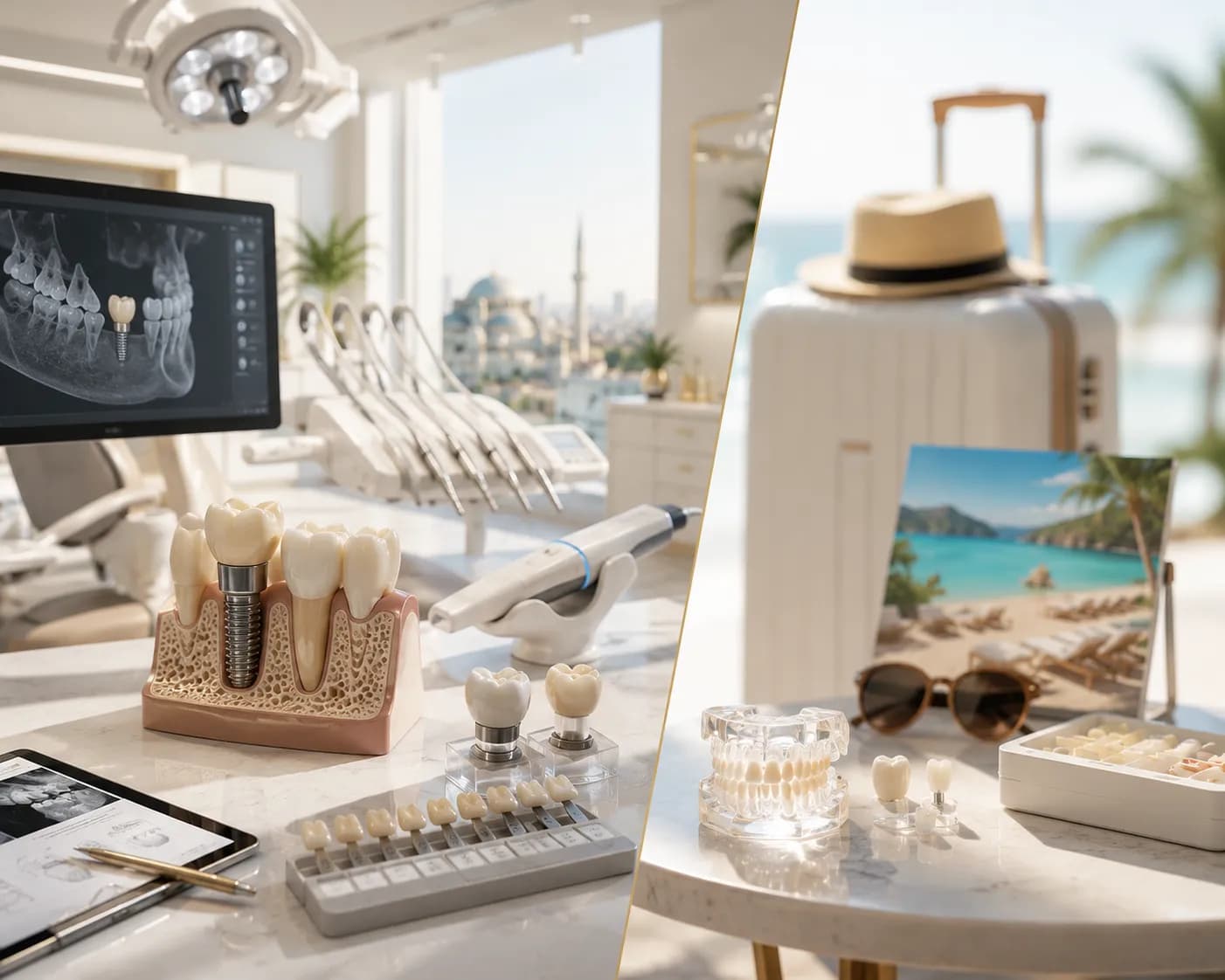
Patients researching dental implants abroad are often directed first toward highly touristic destinations.
Advertisements may combine:
hotels
airport transfers
short treatment schedules
dramatic smile transformations
discounted packages
holidays and sightseeing
This can make dental treatment appear like another component of a travel package.
Dental implant care, however, is not an ordinary tourism product.
Depending on the patient, it may require:
medical assessment
three-dimensional imaging
bone evaluation
surgical planning
implant placement
healing
temporary teeth
prosthetic design
bite adjustment
hygiene instruction
long-term review
The quality of implant treatment is not determined by the hotel, the beach or the speed of the sales response.
It depends on whether the full clinical pathway is organised appropriately.
Ankara, the capital of Turkey, offers a different environment from many traditional dental tourism centres.
The city is shaped more strongly by:
universities
medical faculties
public and private hospitals
specialist healthcare
government institutions
long-term local patient care
multidisciplinary medical services
A Turkish regional-development publication has described Ankara as a major healthcare centre with extensive public and private hospital infrastructure and access to high-technology medical services.
This does not mean that every clinic in Ankara is automatically good, or that clinics in tourist cities are generally poor.
The more relevant difference is the clinical environment and the business model under which a clinic operates.
Why the Treatment Destination Matters
A dental implant is not simply a screw placed in the jaw.
It forms part of a biological and prosthetic system.
The outcome depends on factors including:
bone quality
gum health
implant position
primary stability
loading protocol
design of the future crown or bridge
bite forces
oral hygiene
smoking
general health
long-term maintenance
A destination should therefore not be selected only because of cheap flights, good weather or an attractive hotel package.
More important questions include:
Is enough time allocated for diagnosis?
Is the plan created by a dentist or primarily by a sales team?
Are treatable natural teeth being preserved?
Is the implant position planned around the final restoration?
Are risks discussed honestly?
Is the healing period realistic?
Is follow-up available after the patient returns home?
Is the clinic officially authorized to treat international patients?
When Dentistry Becomes a Travel Product
Dental tourism is not inherently unsafe.
Many patients receive careful and successful dental care abroad.
The problem begins when treatment is organised mainly as a rapidly sold consumer product.
In highly competitive tourism markets, some providers may promote themselves through:
exceptionally low package prices
limited-time discounts
free accommodation
transfers
heavily edited before-and-after images
fixed numbers of crowns or implants
very short treatment schedules
sales coordinators rather than direct dentist communication
A recent review of contemporary dental tourism reported that crowns and implant treatments were among the procedures UK dental professionals considered particularly associated with complications or corrective treatment after care abroad.
This does not mean that most overseas implant treatments fail.
It means complex dental care should not be reduced to speed and price.
The Risk of Standardised Packages
In commercial high-volume treatment models, patients may be offered:
a fixed number of crowns
a fixed number of implants
a standard full-arch package
one material for every tooth
one identical travel schedule
the same approach regardless of the starting condition
A medical treatment plan should not be finalised before assessing:
Which teeth can be preserved?
Which teeth are genuinely hopeless?
Is gum disease present?
How much bone is available?
Does the patient grind their teeth?
What is the bite relationship?
Where should implants be placed prosthetically?
Is immediate loading appropriate?
Would a fixed or removable restoration be more suitable?
Can the patient clean the proposed design?
Ankara may appeal to patients who deliberately want to avoid a standardised dental holiday and prefer a treatment pathway organised more like healthcare.
Why Tourism-Driven Time Pressure Can Be a Problem
International patients often have only a few days available.
Flights, hotels and work commitments create a fixed timetable.
Biological healing does not always fit that timetable.
Implant treatment may require time for:
healing after extraction
control of gum inflammation
bone graft maturation
sinus-lift healing
osseointegration
assessment of temporary teeth
bite adjustments
second-stage surgery
manufacture of the final restoration
The travel plan should be built around the medical timeline, not the other way around.
Research and professional reporting on dental tourism commonly identify rushed scheduling, incomplete diagnostics and limited continuity of care as important areas of risk.
Ankara Is Not Primarily a Dental Holiday Destination
For implant patients, this can be an advantage.
Ankara is less strongly marketed internationally as a beach, nightlife or weekend-tourism destination.
The city is more strongly associated with:
government
universities
medical education
research
specialist hospitals
local healthcare
long-term professional services
This can create a calmer, treatment-focused environment.
The patient’s stay can centre on:
examination
surgery
recovery
review appointments
prosthetic planning
communication with the clinical team
rather than combining complex surgery with a tightly scheduled holiday.
A Healthcare Environment Rather Than a Tourism Infrastructure
In highly touristic dental regions, the patient pathway may be designed around rapid international turnover.
The infrastructure may include:
large call centres
external facilitators
hotel partnerships
sales teams
fixed packages
high daily patient numbers
These systems are not automatically problematic.
They may make travel easier.
The risk appears when operational volume becomes more important than individual clinical decisions.
Ankara’s healthcare demand is also shaped by:
permanent residents
public institutions
universities
businesses
families
patients requiring long-term care
A clinic is therefore less likely to depend exclusively on short-stay international patients.
This can support a model in which:
patients are followed for years
clinical results remain visible to the same team
recalls are part of routine care
treatment is not designed only for a short travel window
local reputation matters alongside online marketing
More Time for a Genuine Clinical Examination
A preliminary online plan should always be confirmed after arrival.
A complete implant assessment may include:
medical history
clinical examination
periodontal evaluation
X-rays
CBCT when indicated
sinus evaluation
bone measurement
bite analysis
assessment of restorable teeth
prosthetic planning
A photograph or panoramic X-ray may not be enough to determine the final implant number or position.
A treatment-focused clinic should also be willing to change the preliminary plan when the examination reveals new information.
Preserving Natural Teeth Instead of Automatically Removing Them
In some high-volume full-arch models, removing the remaining teeth may be presented as the simplest or fastest solution.
Not every compromised tooth needs extraction.
Before removing a tooth, the dentist should consider:
Can it be restored?
Is root canal treatment appropriate?
Can gum treatment improve the prognosis?
Would a crown or partial restoration preserve it?
What is its long-term outlook?
Does it have strategic value in the dental arch?
Preserving natural teeth may be biologically preferable to unnecessary complete implant reconstruction.
A responsible implant plan asks not only where implants can be placed, but also which natural teeth should remain.
Prosthetically Driven Implant Placement
An implant should not be placed merely where bone is available.
The future crown, bridge or denture should guide the surgical position.
Prosthetically driven planning considers:
final tooth position
emergence profile
screw-access channel
bite
distance from neighbouring teeth
hygiene access
direction of force
aesthetics
lip support
A surgically integrated implant can still create a poor result if its position does not allow a functional, aesthetic or cleanable restoration.
Less Focus on “Immediate Fixed Teeth at Any Cost”
Immediate temporary teeth may be possible in appropriate cases.
They are not suitable for everyone.
The decision depends on:
implant stability
bone quality
implant distribution
bite
implant number
smoking
grinding
provisional-restoration design
A responsible clinic should not promise that every patient will receive immediate fixed teeth regardless of the findings.
Sometimes a removable or non-loaded temporary restoration is safer during healing.
Ankara Compared With Other International Dental Destinations
Patients also travel for implant treatment to countries such as:
Hungary
Poland
Croatia
Mexico
Thailand
India
Czechia
Spain
Every destination includes excellent, average and unsuitable providers.
It would therefore be inaccurate to claim that one country always provides better dentistry than another.
Ankara may, however, combine several practical advantages:
lower operating costs than many Western European cities
international accessibility
a healthcare-focused urban environment
a strong university and hospital presence
less dependence on holiday tourism
a calmer recovery setting
access to multidisciplinary care
potentially less sales-driven patient pathways
The main benefit is not price alone.
It is the possibility of combining cost efficiency with a more medical treatment environment.
Lower Costs Without Low-Standard Dentistry
Dental implant treatment in Ankara may cost less than comparable private care in Germany, Austria, Switzerland or the United Kingdom.
Possible reasons include:
lower labour expenses
lower clinic rent
lower laboratory costs
lower local service costs
currency conversion
different private-fee structures
A lower price does not automatically mean cheaper implant components or reduced diagnostics.
Patients should still identify exactly why the quotation is lower.
A complete plan should specify:
implant manufacturer
implant number
abutments
temporary teeth
final restoration
restorative material
grafting
sinus lift
imaging
medication
review visits
possible additional costs
Why the Clinic Matters More Than the City
A patient must still evaluate the individual clinic carefully.
Ankara alone does not guarantee appropriate care.
Patients should verify:
official authorization
identity of the treating dentist
surgical experience
prosthetic planning
implant system
sterilization
documentation
communication
follow-up
complication management
The destination may provide a supportive environment.
The actual quality comes from the clinical team and treatment process.
International Health Tourism Authorization
Healthcare facilities treating international patients within Turkey’s health-tourism framework must hold the relevant authorization.
The Turkish Ministry of Health publishes official lists of authorized healthcare providers.
Authorization is not a guarantee of the outcome.
It is, however, an important first confirmation that the clinic is formally permitted to provide services to international patients.
Patients should also ask:
Is the clinic listed under its legal name?
Is treatment organised directly by the clinic?
Is an external facilitator involved?
Is that facilitator authorized?
Who carries clinical responsibility?
Why Follow-Up Is Essential
Dental implants require long-term review.
After treatment, patients may need:
wound checks
suture removal
implant-stability assessment
bite adjustment
hygiene instruction
radiographic monitoring
crown or bridge reviews
professional implant maintenance
Complications do not always appear immediately.
Peri-implant inflammation, screw loosening, overload and cleaning problems may develop later.
A clinic should therefore explain not only how quickly treatment can be completed, but also how the patient will be supported afterward.
How an Implant Journey to Ankara May Be Organised
Before Travel
Patients may submit:
recent panoramic X-rays
CBCT scans when available
dental photographs
medication list
medical history
previous dental reports
preference for fixed or removable teeth
The online plan remains preliminary until an in-person examination is completed.
First Visit
Possible stages include:
clinical examination
final diagnosis
treatment-plan discussion
implant surgery
grafting
temporary restoration
postoperative review
Healing Phase
The implant heals over weeks or months.
Hygiene, loading and general-health factors must be managed during this period.
Second Visit
Depending on the case, the following may be completed:
implant exposure
digital impressions
trial stages
bite assessment
delivery of the final crown or bridge
hygiene training
Not every patient follows the same timeline.
Who May Benefit From Choosing Ankara?
Ankara may be particularly suitable for patients who:
need complex implant treatment
value medical planning
do not want a typical dental holiday
prefer a calm recovery period
require several dental disciplines
expect a transparent quotation
want natural teeth preserved where possible
consider long-term maintenance
prefer direct contact with the clinical team
When Treatment Abroad May Not Be Appropriate
Travelling may be unsuitable when:
frequent short-term reviews are needed
uncontrolled medical conditions are present
the patient cannot travel safely
no follow-up is available at home
extensive preliminary treatment is required
expectations are unrealistic
price is the only deciding factor
Dental Implant Treatment at DentisLife in Ankara
At DentisLife, implant care is not planned as a standard holiday package.
The process begins by identifying which teeth can be preserved, which teeth genuinely require replacement and which implant-prosthetic design will remain functional, cleanable and maintainable.
Assessment may include:
clinical examination
periodontal evaluation
panoramic imaging
CBCT when indicated
bone analysis
bite assessment
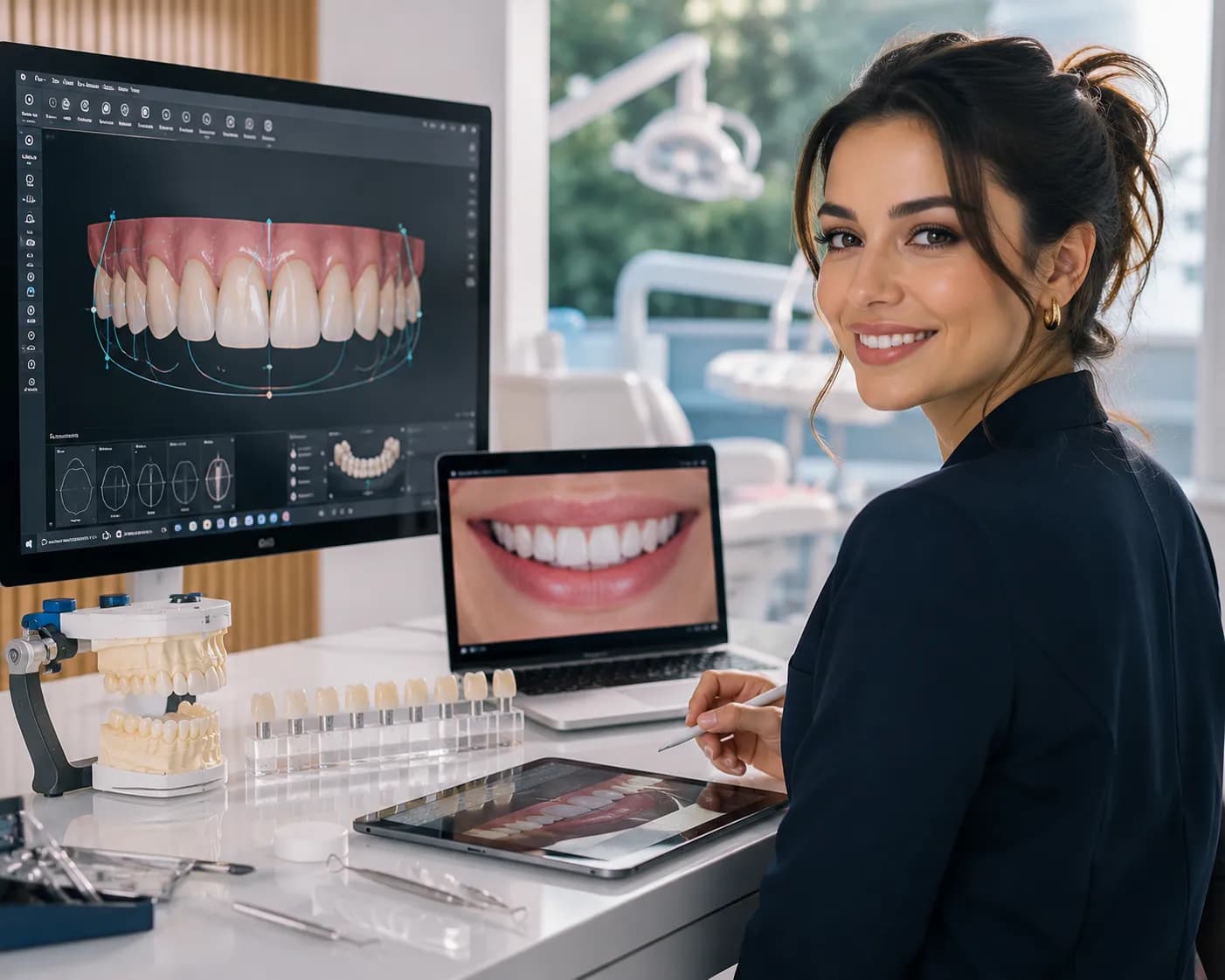
digital planning
evaluation of restorable teeth
implant-system selection
prosthetically driven implant placement
temporary-restoration planning
long-term hygiene strategy
Depending on the diagnosis, different options may be discussed:
single implants
implant-supported bridges
implant-retained removable dentures
fixed full-arch restorations
preservation of natural teeth
staged treatment
bone grafting or alternative designs
DentisLife treats local and international patients. The clinic’s workflow is therefore not based exclusively on short-stay tourism packages or rapid patient turnover.
Direct communication with the treating team, tooth-by-tooth diagnosis and coordination between surgery and prosthetic dentistry remain central to the process.
DentisLife holds the International Health Tourism Authorization Certificate and is officially authorized to provide healthcare services to international patients in Turkey. This supports structured documentation, international communication, treatment organisation and follow-up.
For overseas patients, planning also considers:
travel duration
number of required visits
biological healing
temporary teeth
postoperative communication
delivery of implant records
coordination with a home dentist when necessary
The difference is not that Ankara or DentisLife can be declared universally better than every other destination.
The difference is the treatment model: diagnosis before sales, individual planning before standard packages and long-term function before rapid cosmetic transformation.
Frequently Asked Questions
Is Ankara better for dental implants than Istanbul or Antalya?
There is no universal answer.
All cities contain different types of clinics. Ankara may suit patients who prefer a healthcare-focused and less holiday-oriented environment.
Are implants in Ankara cheaper than in Europe?
They may be, because labour, rent, laboratory and operating costs differ.
The complete scope of treatment must still be compared.
Is a clinic in a tourist city automatically worse?
No.
The concern is not the city itself. It is a business model in which sales, speed or package volume may take priority over individual planning.
Why may Ankara be calmer for recovery?
The city is less focused on beach and nightlife tourism.
Patients may find it easier to organise their stay around treatment, rest and review appointments.
Do Ankara clinics use the same implant brands as European clinics?
Clinics in Turkey can use internationally available systems.
Patients should ask for the exact manufacturer, product line and implant passport.
Can implants be completed during one short trip?
Temporary teeth may be possible in selected cases.
The final restoration often requires a healing period.
How many visits are required?
One, two or more visits may be needed.
Grafting and complex full-arch treatment can require additional stages.
What should I check before booking?
Check:
official authorization
treating dentist
implant brand
complete quotation
treatment stages
provisional teeth
final material
follow-up
additional costs
Is DentisLife authorized to treat international patients?
Yes. DentisLife holds the International Health Tourism Authorization Certificate.
How does DentisLife differ from a standard implant package?
The treatment plan is based on the individual condition of the teeth, bone, gums and bite. The number of implants or crowns is not assigned as the same package for every patient.
Summary
The best destination for dental implants is not necessarily the most famous tourist city or the clinic offering the lowest package price.
A sound decision depends on:
accurate diagnosis
preservation of natural teeth
correct implant positioning
realistic healing time
suitable prosthetic design
transparent costs
direct dentist communication
long-term follow-up
official authorization
Highly touristic dental markets can provide good treatment. In some high-volume business models, however, standard packages, time pressure and sales targets may interfere with individual care.
Ankara offers an alternative because the city is shaped more strongly by medicine, universities, government and long-term local healthcare.
At DentisLife, this environment is combined with individual implant planning, direct clinical communication and a structured international patient pathway.