Dental implants are a widely used and effective way to replace missing teeth. They can support individual crowns, bridges or full dentures and can help preserve jawbone in the area where the implant is placed. However, implant treatment involves surgery, sufficient bone, appropriate healing conditions and a long-term commitment to oral hygiene and follow-up.
Implants are therefore not the right choice for every patient.
Some people cannot undergo implant surgery because of their general health, medication, bone condition or healing risk. Others prefer a removable or less invasive solution. Cost, treatment duration and personal expectations may also influence the decision.
Before replacing a tooth, another question should also be asked:
Can the natural tooth still be saved?
Root canal treatment or periodontal therapy is not technically a replacement for an already missing tooth. However, these treatments may prevent extraction and remove the need for an implant altogether.
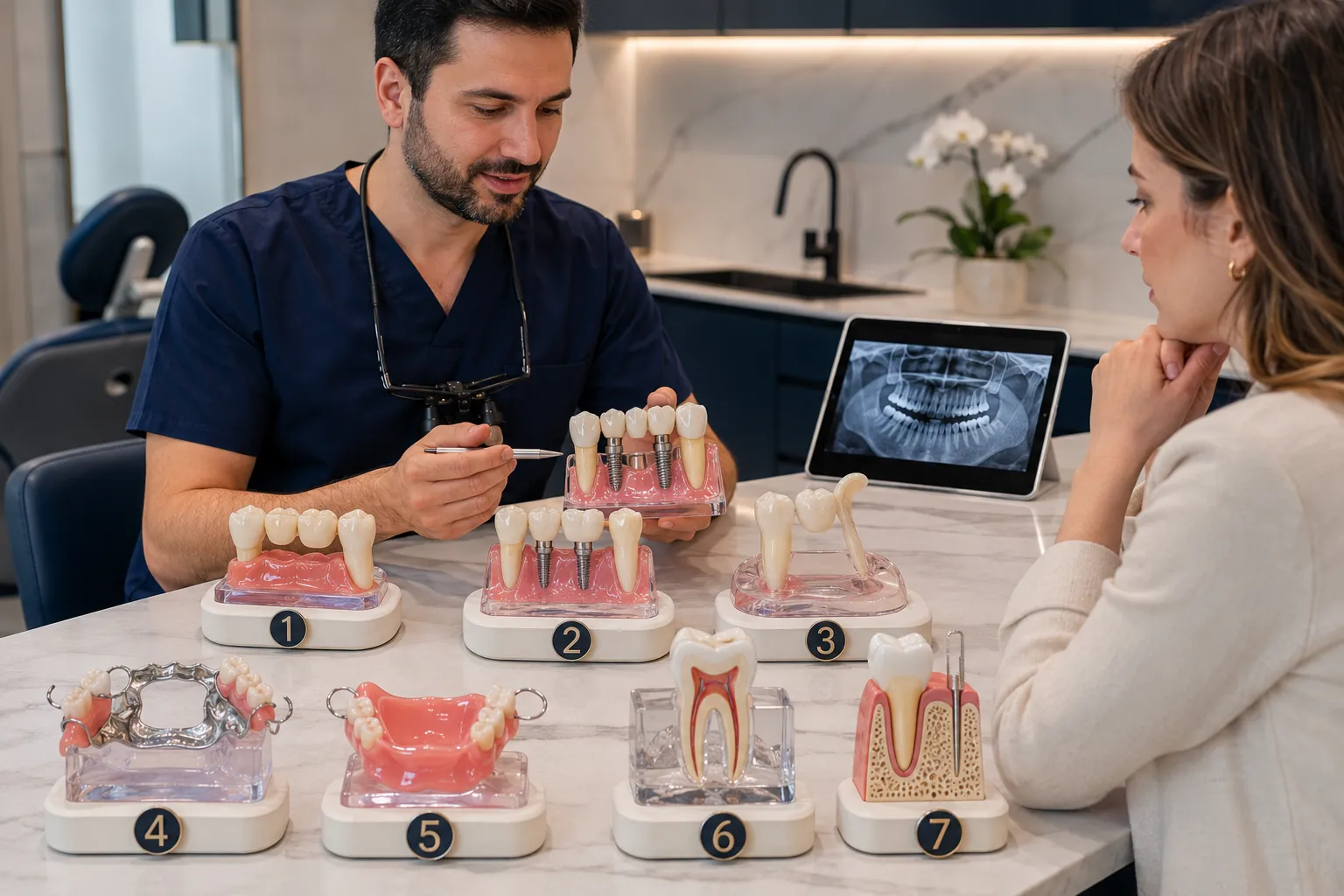
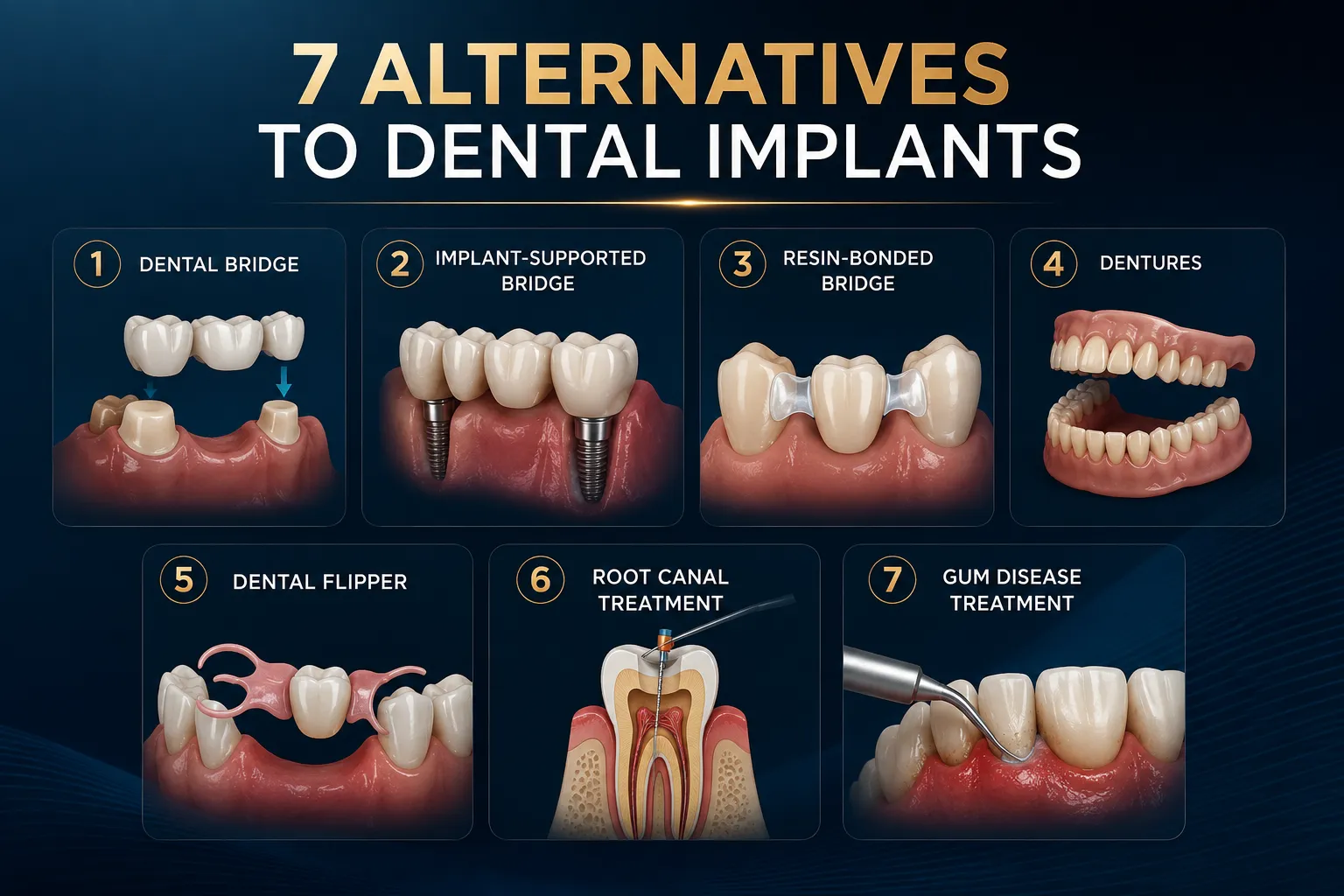
This guide explains seven possible alternatives or alternative treatment paths:
Conventional dental bridge
Implant-supported bridge
Resin-bonded bridge
Removable denture
Dental flipper or temporary partial denture
Root canal treatment
Gum disease treatment
An Important Scientific Clarification
An implant-supported bridge is not a completely implant-free alternative.
It still uses dental implants as its foundation. It is included in this guide because it can be an alternative to replacing every missing tooth with a separate implant.
For example, three or four missing teeth may sometimes be replaced with a bridge supported by fewer implants rather than one implant for each missing tooth.
Patients who wish to avoid surgery entirely should focus more closely on:
tooth-supported bridges
resin-bonded bridges
removable dentures
temporary partial dentures
preservation of natural teeth when possible
What Makes a Good Alternative to Dental Implants?
The best option depends on the problem being solved.
If you want a fixed replacement
A conventional bridge or, when implants are still acceptable, an implant-supported bridge may be considered.
If you want to avoid surgery
A tooth-supported bridge, resin-bonded bridge or removable denture may be more suitable.
If cost is a major concern
Removable dentures and temporary partial dentures may initially be less expensive, although maintenance and future replacement should also be considered.
If the tooth is still present
Root canal treatment or periodontal therapy may preserve it and prevent the need for extraction.
If you need a temporary solution
A dental flipper can fill the space while healing, further treatment or financial planning takes place.
If preserving neighbouring teeth is the priority
A resin-bonded bridge may require less preparation than a conventional bridge in selected cases.
No single solution is ideal for everyone. The condition of the remaining teeth, gums, jawbone and bite must be evaluated before treatment.
1. Conventional Dental BridgeA conventional dental bridge replaces one or more missing teeth with an artificial tooth or teeth connected to crowns placed on the neighbouring natural teeth.
The supporting teeth are called abutment teeth.
A bridge is fixed in the mouth and can only be removed by a dentist. The ADA describes a fixed bridge as a restoration that fills the space left by missing teeth and is attached to surrounding teeth for support.
How Does a Dental Bridge Work?
If one tooth is missing, the teeth on either side of the gap are usually prepared for crowns.
The laboratory then produces a connected restoration consisting of:
one crown on the first supporting tooth
an artificial replacement tooth
one crown on the second supporting tooth
The bridge is cemented to the prepared teeth.
Who May Be Suitable?
A conventional bridge may be considered when:
one or several adjacent teeth are missing
the neighbouring teeth are strong enough to support the bridge
those teeth already need crowns or contain large restorations
the patient wants a fixed result
implant surgery is unsuitable or unwanted
oral hygiene is adequate
the bite can support the restoration
Advantages
fixed rather than removable
does not require implant surgery
often completed faster than implant treatment
can restore chewing and appearance
may be particularly logical when neighbouring teeth already require crowns
Limitations
neighbouring teeth usually need to be prepared
supporting teeth carry additional load
decay can develop around crown margins
cleaning under the artificial tooth requires special techniques
the bridge does not replace the missing tooth root
bone in the empty area may continue to change over time
Is a Bridge Better Than an Implant?
Not necessarily.
A bridge may be a good choice when the supporting teeth already need crowns. However, preparing two completely healthy teeth to replace one missing tooth involves an irreversible biological cost.
The decision should consider the condition of the entire area rather than only the empty space.
2. Implant-Supported BridgeAn implant-supported bridge replaces several missing teeth using two or more implants as anchors.
Unlike a conventional bridge, it does not rely on neighbouring natural teeth for support.
Implants can be used to support crowns, bridges and dentures.
Why Is It Included as an Alternative?
It may be an alternative to:
placing one implant for every missing tooth
preparing healthy natural teeth for a conventional bridge
wearing a removable partial denture
placing a larger number of implants in a full-arch case
It is not an alternative for patients who must avoid implant surgery altogether.
Who May Be Suitable?
An implant-supported bridge may be considered when:
several neighbouring teeth are missing
sufficient bone is available
the patient is medically suitable for surgery
natural teeth should not be prepared
a fixed result is preferred
hygiene around the bridge can be maintained
Advantages
fewer implants may replace several teeth
neighbouring teeth may remain untouched
fixed restoration
chewing forces are supported by implants
may help maintain bone around implant positions
can provide greater stability than a removable denture
Limitations
still requires surgery
healing time may be necessary
not suitable for all bone or medical conditions
cleaning under the bridge is essential
implant and prosthetic complications remain possible
treatment may be more expensive than a conventional bridge or denture
Important Planning Point
The bridge should not simply fill the space.
Implant positions must be planned according to:
available bone
final tooth position
bite forces
cleaning access
gum contours
prosthetic material
long-term maintenance
A resin-bonded bridge is also called an adhesive bridge or, in some designs, a Maryland bridge.
It usually consists of an artificial tooth attached to one or two thin wings that are bonded to the back surfaces of neighbouring teeth.
How Is It Different From a Conventional Bridge?
A conventional bridge usually requires the supporting teeth to be prepared for full crowns.
A resin-bonded bridge often requires:
little tooth preparation
enamel-level preparation
no full crown preparation
This can make it a more conservative option.
Who May Be Suitable?
A resin-bonded bridge is often considered for:
a single missing front tooth
younger patients
patients with healthy neighbouring teeth
patients who want to avoid implant surgery
temporary or medium-term replacement
selected situations after dental trauma
patients with sufficient enamel for bonding
Advantages
relatively conservative
often little tooth reduction
no implant surgery
fixed in the mouth
can usually be completed faster than implant treatment
may preserve future treatment options
Limitations
may debond
not suitable for every bite
less suitable for some back-tooth situations
requires favourable tooth position
colour and shape must be carefully matched
the artificial tooth does not replace the root
jawbone in the missing-tooth area is not directly stimulated
One Wing or Two?
Modern designs often use a single supporting wing in appropriate cases because bonding the bridge rigidly to two teeth that move differently may increase stress.
The exact design should be selected according to the bite, enamel, tooth position and available space.
4. Removable DenturesDentures are removable appliances used to replace missing teeth.
A partial denture replaces some teeth, while a complete denture replaces all teeth in one jaw.
Dentures fit over the gums, and some partial dentures also attach to remaining teeth.
Types of Dentures
Partial Denture
Used when some natural teeth remain.
It may be made with:
acrylic
a metal framework
clasps
precision attachments
flexible materials in selected cases
Complete Denture
Used when all teeth in the upper or lower jaw are missing.
Its stability depends on:
gum and bone anatomy
saliva
muscle control
denture design
bite
adaptation by the patient
Who May Be Suitable?
Dentures may be considered when:
multiple teeth are missing
all teeth are missing
surgery is contraindicated
bone grafting is not desired
a lower-cost option is needed
remaining teeth cannot support a fixed bridge
the patient accepts a removable solution
Advantages
no implant surgery required
can replace many teeth at once
often lower initial cost
can restore appearance and basic chewing function
can be modified when additional teeth are lost
may be used temporarily or long term
Limitations
removable
movement may occur during eating or speaking
chewing efficiency may be lower than with fixed restorations
pressure areas can develop
regular adjustment may be required
bone and gum anatomy can change over time
adhesives may sometimes be needed
replacement is usually necessary after years of use
Dentures must be removed and cleaned properly. Some hospital guidance recommends removing removable dentures after meals for cleaning and leaving them out overnight to reduce inflammation beneath the appliance.
Can Dentures Preserve Jawbone?
Conventional dentures do not replace tooth roots.
After tooth loss, bone volume may gradually change. As the ridge changes, the denture may become loose and require adjustment, relining or replacement.
5. Dental Flipper or Temporary Partial DentureA dental flipper is a lightweight removable partial denture, usually made from acrylic.
In German dentistry, it is more appropriately described as an Interimsprothese or temporary partial denture.
It is designed mainly as a temporary solution rather than a definitive long-term restoration.
When Is a Dental Flipper Used?
A flipper may be used:
immediately after tooth extraction
while an implant site heals
during bone graft healing
while waiting for a final bridge
after dental trauma
during treatment planning
when the patient needs time to make a financial decision
as a temporary aesthetic replacement for a front tooth
Advantages
relatively quick to produce
usually lower cost
no surgery
restores the visible gap
removable for cleaning
can provide time for tissues to heal
allows future treatment planning
Limitations
not as stable as a fixed bridge
may move during speech or eating
can break
may feel bulky
may place pressure on healing tissues
must be cleaned carefully
not normally ideal as a permanent solution
may need adjustment as the gum shape changes
Is a Flipper Safe After Extraction?
It can be, provided it is designed and adjusted correctly.
The appliance must not place uncontrolled pressure on:
the extraction socket
a bone-grafted area
surgical sutures
inflamed tissue
Follow-up is important because swelling and gum shape can change rapidly after extraction.
6. Root Canal TreatmentRoot canal treatment is not a replacement for a missing tooth.
It is a tooth-saving alternative to extraction when the natural tooth is still present but its pulp is infected or inflamed.
The treatment removes infected or damaged tissue from inside the root canals, cleans and disinfects the space and seals it to preserve the tooth.
When May Root Canal Treatment Help Avoid an Implant?
It may be considered when a tooth has:
deep decay
infected pulp
irreversible pulp inflammation
pain caused by pulpal disease
a dental abscess
trauma
a crack that has reached the pulp
a failed previous root canal that can be retreated
Advantages
preserves the natural tooth
avoids extraction when the tooth is restorable
maintains the tooth in its original position
may avoid the need for a bridge or implant
retains natural periodontal sensation
can restore chewing function
often requires less overall treatment than extraction and replacement
The AAE emphasizes that root canal treatment is intended to eliminate infection and preserve the natural tooth. It also notes that saving the tooth can avoid the need for more extensive replacement with an implant or bridge.
Limitations
Root canal treatment cannot save every tooth.
The prognosis may be poor when:
the tooth has a vertical root fracture
very little restorable tooth structure remains
decay extends too far below the gum
periodontal support is severely reduced
the root anatomy cannot be treated predictably
the tooth cannot be restored functionally
infection remains uncontrolled despite treatment
Does a Root Canal-Treated Tooth Need a Crown?
Sometimes.
The need depends on:
tooth type
amount of remaining structure
size of previous fillings
bite forces
cracks
fracture risk
Back teeth frequently require greater protection because they receive higher chewing forces.
7. Gum Disease TreatmentPeriodontal treatment is also not a replacement for a missing tooth.
It is a potential alternative to extraction when a tooth is still present but has lost support because of gum disease.
Periodontitis damages the gums and bone that support teeth and is a major cause of tooth loss in adults. Treatment depends on the stage and severity of the disease.
What Does Gum Disease Treatment Involve?
Treatment may include:
oral hygiene instruction
professional plaque and calculus removal
cleaning below the gum line
root surface debridement
control of risk factors
periodontal surgery in selected cases
management of smoking
diabetes control
supportive periodontal maintenance
regular measurement and follow-up
The KZBV describes periodontal treatment as a structured process that includes anti-infective therapy, patient education and long-term supportive care.
When Can Periodontal Treatment Save a Tooth?
A tooth may be maintainable when:
enough bone support remains
mobility is manageable
inflammation can be controlled
the patient can maintain good hygiene
smoking and systemic risks are addressed
the tooth has strategic value
the root and crown remain restorable
regular maintenance is possible
Advantages
preserves the natural tooth
may avoid extraction and replacement
treats active disease rather than only the missing-tooth consequence
improves gum health around other teeth
may improve suitability for future restorative treatment
reduces the risk of further tooth loss when successful
Limitations
advanced disease may be irreversible
bone loss cannot always be fully regenerated
long-term maintenance is essential
treatment success depends strongly on plaque control
smoking can compromise outcomes
very mobile or structurally damaged teeth may still require extraction
Uncontrolled periodontitis should be treated before implant placement because the same plaque-related susceptibility can also affect tissues around implants.
Comparison of the Seven OptionsOptionFixed or RemovableSurgery Required?Replaces a Missing Tooth?Preserves a Natural Tooth?Typical UseConventional bridgeFixedNoYesNoOne or several missing teethImplant-supported bridgeFixedYesYesNoSeveral missing teeth with fewer implantsResin-bonded bridgeFixedNoYesNoOften one missing front toothDentureRemovableNoYesNoMultiple or all missing teethDental flipperRemovableNoTemporarilyNoShort-term replacementRoot canal treatmentNatural tooth retainedUsually no surgical implant procedurePrevents tooth lossYesInfected but restorable toothGum disease treatmentNatural tooth retainedSometimes periodontal surgeryPrevents tooth lossYesPeriodontally affected tooth
Which Option Is Best for One Missing Tooth?
Possible options include:
conventional bridge
resin-bonded bridge
removable temporary partial denture
accepting the space in selected cases
implant crown, if suitable
A resin-bonded bridge may be particularly attractive when the missing tooth is in the front and neighbouring teeth are healthy.
A conventional bridge may be more logical if those teeth already require crowns.
Which Option Is Best for Several Missing Teeth?
Possible options include:
conventional bridge
implant-supported bridge
removable partial denture
combination treatment
The length of the gap, condition of the supporting teeth, bite and available bone all influence the decision.
Which Option Is Best When All Teeth Are Missing?
Possible options include:
complete dentures
implant-retained overdentures
fixed full-arch implant bridges
A conventional complete denture avoids surgery but may provide less stability, particularly in the lower jaw.
An implant-retained denture is more stable but still requires implants and surgery.
What About Leaving the Gap Untreated?
Not every missing tooth must automatically be replaced.
In selected cases, accepting a space may be reasonable when:
chewing remains adequate
appearance is acceptable
neighbouring teeth are stable
the bite is not expected to deteriorate
the patient does not want treatment
replacement risks outweigh the benefit
Cambridge University Hospitals notes that accepting a space may sometimes be preferable when sufficient functional teeth remain.
However, untreated spaces can sometimes contribute to:
drifting of neighbouring teeth
overeruption of the opposing tooth
food trapping
altered chewing
aesthetic concerns
changes in bite
The decision should be individualized.
Do Non-Implant Options Preserve Jawbone?
Traditional bridges and removable dentures replace the visible tooth but do not replace the root inside the bone.
They therefore do not stimulate the bone in exactly the same way as a functioning natural root or osseointegrated implant.
However, the statement that implants always preserve all jawbone is too absolute.
Bone changes can still occur around implants, and preservation depends on:
implant position
tissue health
loading
infection control
smoking
periodontal history
long-term maintenance
Implants may help preserve bone around their position, but they do not eliminate every form of bone remodeling.
How Should You Choose?
The decision should follow diagnosis rather than preference alone.
A complete assessment may include:
clinical examination
periodontal evaluation
tooth vitality testing
radiographs
CBCT when clinically indicated
bite analysis
bone evaluation
review of medical conditions
evaluation of remaining teeth
discussion of fixed and removable options
long-term cost and maintenance
Questions to Ask Your Dentist
Can the natural tooth still be saved?
Why is extraction being recommended?
Is root canal or periodontal treatment possible?
Are the neighbouring teeth healthy?
Would they need to be prepared for a bridge?
Is a resin-bonded bridge possible?
Can I use a temporary denture while deciding?
What happens to the bone without an implant?
How long is the expected treatment?
Which option is easiest to clean?
What maintenance or replacement will be needed?
What are the total long-term costs?
What happens if the treatment fails?
Can the plan be changed later?
Why Treatment Planning Matters More Than Choosing a Product
A missing tooth is not a diagnosis.
The reason the tooth was lost—or is at risk of being lost—must be understood.
Possible underlying causes include:
decay
fracture
failed root canal treatment
periodontitis
trauma
excessive bite forces
congenital absence
failed previous restoration
Replacing the tooth without managing the cause may place the new restoration and remaining teeth at risk.
Alternatives to Dental Implants at DentisLife
At DentisLife in Ankara, Turkey, treatment planning begins by determining whether the tooth can be preserved and what type of replacement is medically appropriate.
The evaluation may include:
tooth restorability
root canal prognosis
periodontal support
remaining bone
condition of neighbouring teeth
bite forces
smile and speech requirements
preference for fixed or removable treatment
medical suitability for surgery
oral hygiene
long-term follow-up requirements
At DentisLife, implant treatment is not automatically recommended simply because a tooth is damaged or missing.
When appropriate, patients may be advised about:
root canal treatment
periodontal treatment
conventional bridges
resin-bonded bridges
temporary dentures
partial or complete dentures
implant-supported solutions
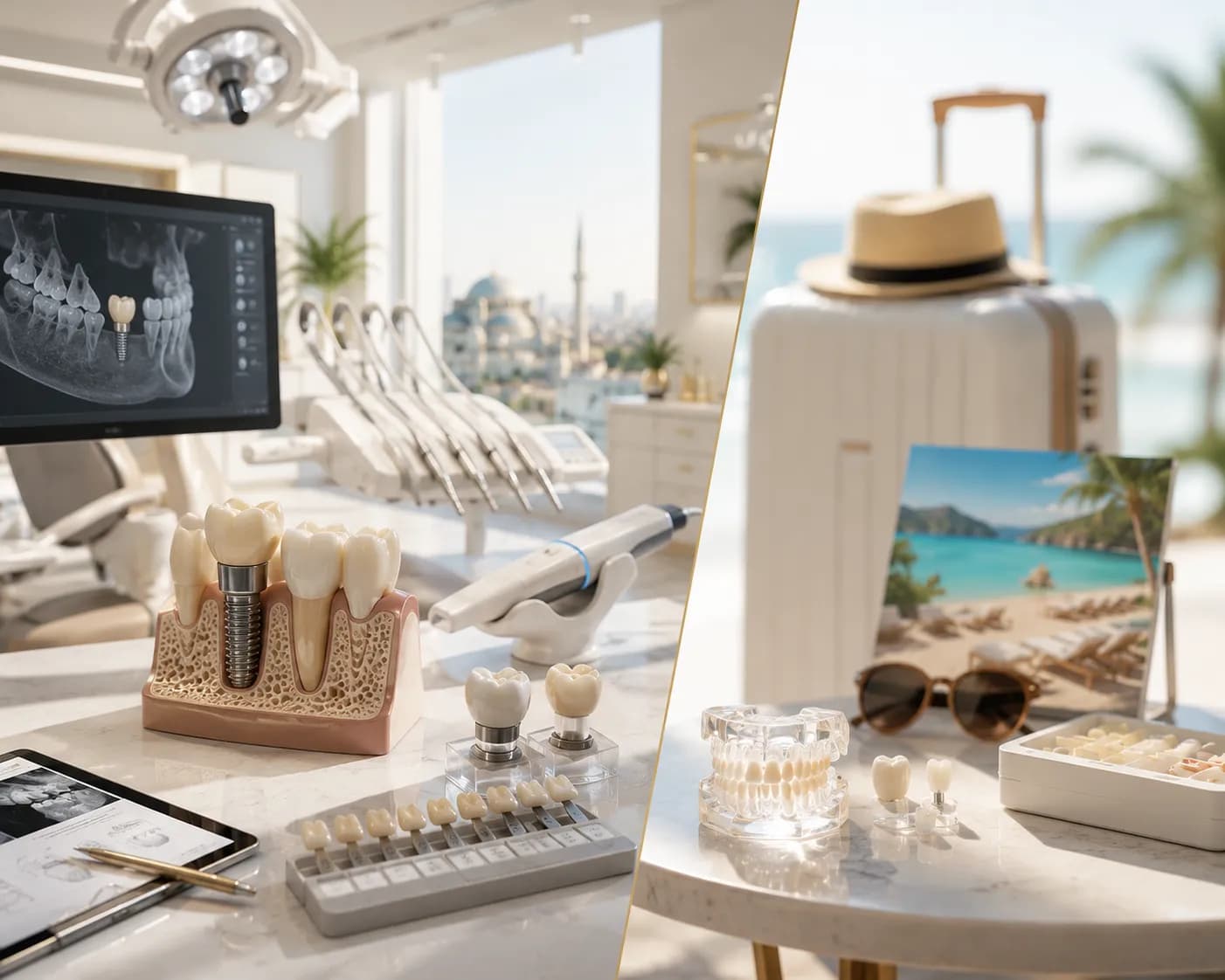
Why Ankara Can Support Treatment-Focused Planning
Ankara offers an environment in Turkey that is strongly associated with structured healthcare rather than mass tourism.
For patients comparing several restorative options, this can support:
detailed diagnosis
multidisciplinary consultation
imaging and treatment planning
laboratory coordination
evaluation of temporary restorations
follow-up
treatment-focused travel
Complex dental decisions should not be reduced to the fastest package or lowest unit price.
Frequently Asked Questions
What is the closest alternative to a single dental implant?
A fixed dental bridge is one of the closest fixed alternatives. A resin-bonded bridge may be considered for selected front teeth.
What is the cheapest alternative to implants?
Temporary or removable dentures often have a lower initial cost. However, future adjustments, relining and replacement should be considered.
Can a bridge be placed without damaging neighbouring teeth?
A conventional bridge usually requires tooth preparation. A resin-bonded bridge may require much less preparation in suitable cases.
Can dentures replace one tooth?
Yes. A small removable partial denture or flipper may replace one tooth, although it is usually less stable than a fixed restoration.
Is an implant-supported bridge implant-free?
No. It uses implants but may reduce the number of implants required to replace several teeth.
Is root canal treatment better than an implant?
They treat different situations. Root canal treatment preserves a restorable natural tooth; an implant replaces a tooth that has already been removed or cannot be saved.
Can gum treatment prevent extraction?
In some cases, yes. The outcome depends on remaining bone, tooth mobility, disease severity, hygiene and long-term maintenance.
Do bridges and dentures stop bone loss?
They replace the visible teeth but do not replace the natural roots. They therefore do not preserve bone in the same way as implants or retained natural teeth.
CTAThe best alternative to a dental implant depends on whether the tooth is already missing, whether it can still be saved and whether you prefer a fixed or removable solution.
International patients can request an online preliminary assessment from DentisLife in Ankara, Turkey by providing recent radiographs, photographs and previous treatment information.
The final recommendation is made after evaluating the teeth, gums, bite, bone condition and long-term maintenance needs.
International Health Tourism Authorization CertificateDentisLife holds the International Health Tourism Authorization Certificate and is officially authorized to provide healthcare services to international patients in Turkey.
This authorization supports:
regulated international patient processes
documented medical and administrative procedures
transparent treatment planning
compliance with applicable healthcare requirements
structured communication and follow-up
The certificate does not mean that one treatment is suitable for every patient. The final choice between tooth preservation, bridges, dentures and implant-based treatment must follow an individual clinical assessment.